

Health truth and liesHealth truth and lies
HomeContacts
Health truth and liesHealth truth and lies

Your source of verified health information

Home

  • Home

Contacts

  • Contacts

Legal

  • Policy
  • Terms of Use

© 2026 Health truth and lies. All rights reserved.

Scientific facts

Truth and lies about health

Verified scientific information about biology, health, and how science changes our lives

Scientific illustration

Categories

Explore key areas of health knowledge

Cardiovascular health

Cardiovascular health

Heart and vascular function, blood quality, blood circulation, prevention of cardiovascular diseases

Read →
Cellular health

Cellular health

How our cells work and “communicate,” what determines their energy, renewal, and stability.

Read →
Healthy longevity

Healthy longevity

What really works for a long and healthy life: from food choices to stress management

Read →
Nutrition

Nutrition

Nutrition, diets, meal timing

Read →

Latest Articles

Why You're Always Hungry
Nutrition

Why You're Always Hungry

A science-backed deep dive into the nutrients modern people lack, the real reasons behind constant hunger, and what actually works — explained in plain language. 🔬 Evidence-Based | 📚 18 Key Sources | 🧠 Plain Language | ✅ Practical Advice 🎯 The Short Answer If you're always hungry, constantly craving food, or can't stop eating even when you logically "shouldn't be" — this isn't just a matter of willpower. Science shows it's likely a combination of nutrient gaps your body is trying to fill, hormonal disruption from ultra-processed foods, poor sleep, and stress chemistry. This article unpacks all of it — with real evidence and real solutions. 📋 What You'll Find in This Article Part 1: The Nutrients Most People Are Missing — The Top 5 deficiencies in modern diets (+ food sources) Part 2: The Hunger Chemistry — Why You Can't Stop Eating — Ghrelin, leptin, dopamine, and ultra-processed food traps Part 3: It's Not Just Food — Hidden Hunger Drivers — Sleep, stress, boredom, and emotional eating What Works (Evidence Table) What Doesn't Work All Sources 🥦 Part 1: The Nutrients Most People Are Missing Here's a shocking truth: you can be overweight and still malnourished at the same time. This sounds impossible, but it happens to millions of people every day. Modern diets are loaded with calories — but often stripped of the actual micronutrients (vitamins and minerals) that the body desperately needs. Researchers call this "hidden hunger." When your body lacks something essential, it sends a hunger signal — and you keep eating, hoping to find it. A major 2024 analysis published in The Lancet Global Health modeled nutrient intake across 185 countries and 34 different age groups. The conclusion was stark: inadequate micronutrient intake affects a large majority of the global population across 15 key nutrients. [9/10, №1] And when people struggling financially switch to cheaper, ultra-processed foods, their risk of micronutrient deficiency climbs dramatically, while paradoxically their risk of overweight also rises. [7/10, №2] ⚠️ You Can Be Overfed and Undernourished The paradox of the modern world: cheap, calorie-dense junk food fills your stomach but leaves critical nutrient needs unmet. Your body then keeps signaling hunger — looking for what it still needs. Eating more junk food doesn't fix it. The Big 5: Most Common Deficiencies 🪨 Magnesium 31% of the global population is deficient [7/10, №3] Magnesium is the body's "master mineral" — it's involved in over 300 biochemical reactions: energy production, sleep, muscle function, mood, and blood sugar control. Yet roughly 1 in 3 people worldwide don't get enough. In the US, nearly 45% of adults fall below the recommended level. [7/10, №3] When magnesium is low, you can feel tired, anxious, get muscle cramps, sleep poorly, and have unstable blood sugar — all of which drive cravings and overeating. [7/10, №4] ☀️ Vitamin D ~1 billion people deficient worldwide [8/10, №5] Vitamin D is technically a hormone, not just a vitamin. Most of us get it from sunlight — but modern indoor lifestyles mean we barely absorb enough. Up to 1 billion people globally have insufficient levels. [8/10, №5] Deficiency is the most common micronutrient deficiency worldwide, ahead of iron. Low vitamin D is linked to fatigue, depression, weakened immunity, and poor bone health. People with darker skin tones, those living far from the equator, or who spend most time indoors are at highest risk. [6/10, №6] 🌿 Dietary Fiber 10g typical daily intake vs. 25-30g recommended The WHO and European Food Safety Authority recommend 25 grams of fiber per day. Most people in industrialized countries consume half that — or even less. Fiber isn't just "roughage." It feeds your gut bacteria, slows sugar absorption, reduces cholesterol, and — crucially — tells your brain "I'm full." [9/10, №7] A Lancet-published systematic review confirmed that inadequate fiber intake is strongly linked to heart disease, type 2 diabetes, colorectal cancer, and overall mortality — diseases once nearly absent in traditional fiber-eating populations. [9/10, №7] 🥩 Protein (Relative Shortage) 15% typical protein share vs. 25-30% optimal for satiety Most people aren't severely protein-deficient, but they eat too little relative to what's needed to feel full. Protein is the most satiating macronutrient — it actively suppresses the hunger hormone ghrelin and boosts fullness hormones like GLP-1 and PYY. [8/10, №8] A comprehensive meta-analysis of 49 clinical trials found that when people eat protein, they feel less hungry, eat less at subsequent meals, and their hunger hormone levels drop within hours. [7/10, №9] 🧠 B Vitamins (especially Thiamine/B1) 2nd most common deficiency after Vitamin D [7/10, №10] Thiamine (Vitamin B1) is critical for energy metabolism and the production of neurotransmitters. Systematic reviews of community-dwelling adults found thiamine to be the second most common micronutrient deficiency, yet it's rarely discussed. [7/10, №10] When thiamine is low, carbohydrates can't be properly converted to energy — they instead end up as fat and produce toxic byproducts. This creates a cycle of fatigue and cravings for more carbohydrates. 🍽️ Where to Get These Nutrients (Practical Guide) 🪨 Magnesium Best Food Sources: Dark chocolate (70%+), almonds, spinach, pumpkin seeds, black beans, avocado, whole grains Daily Amount: Men: 420 mg/day | Women: 320 mg/day Tips for Better Absorption: Take magnesium glycinate or citrate (better absorbed than oxide). Avoid taking with calcium supplements (compete for absorption). Coffee and alcohol deplete it. ☀️ Vitamin D Best Food Sources: Fatty fish (salmon, sardines, herring), egg yolks, mushrooms exposed to sunlight. Almost impossible to get enough from food alone. Daily Amount: 400–800 IU/day (official) but many experts suggest 1000–2000 IU for deficient people Tips for Better Absorption: The main source is sunlight — 15-30 min of midday sun on arms and face. Take Vitamin D3 (not D2) with meals containing fat. Best tested by a blood test. 🌿 Fiber Best Food Sources: Legumes (lentils, beans = 15-20g/cup), whole oats, avocado, broccoli, berries, apples with skin, flaxseed, psyllium husk Daily Amount: 25 g/day (women) | 38 g/day (men) Tips for Better Absorption: Increase gradually over 2-3 weeks to avoid gas. Drink plenty of water. Both soluble fiber (oats, beans) and insoluble fiber (vegetables, whole grains) are needed. 🥩 Protein Best Food Sources: Eggs, Greek yogurt, chicken breast, lentils, cottage cheese, fish, tofu, edamame Daily Amount: Minimum: 0.8 g/kg body weight. For satiety: aim for 1.2–1.6 g/kg/day Tips for Better Absorption: Spread across meals (aim for 20-30g per meal). Breakfast protein is especially important — it sets hormonal tone for the whole day. 🧠 B Vitamins Best Food Sources: Whole grains, legumes, leafy greens, eggs, meat, nutritional yeast. B12 only in animal products or supplements. Daily Amount: Varies by B vitamin; B12 often needs supplementation especially for vegetarians/vegans Tips for Better Absorption: Refined grains (white bread, white rice) strip B vitamins. Ultra-processed diets reliably deplete them. If vegetarian/vegan, always supplement B12. 🔬 Interesting Fact: Popular Diets Are Micronutrient Traps One revealing study tested 4 popular diet plans (Atkins, South Beach, DASH, and others) for all 27 essential micronutrients. None of the four diets met the minimum recommended intake for all nutrients. On average, they only covered about 12 out of 27 micronutrients — and to get all 27 from food alone, you'd theoretically need to eat over 27,000 calories per day. [7/10, №11] 🧠 Part 2: The Hunger Chemistry — Why You Can't Stop Eating Even when you know you've eaten enough, the urge to keep going doesn't stop. This isn't weakness — it's biology. Two hormones control your hunger dial, and modern food has learned how to break them: 😤 Ghrelin — "The Hunger Hormone" Made in your stomach. Goes up when you're hungry and signals the brain: "Feed me now!" Normally drops after you eat. In people who eat lots of ultra-processed foods, this system gets stuck — ghrelin doesn't drop properly even after a meal. 😌 Leptin — "The Fullness Hormone" Made by fat cells. Its job is to tell the brain "I'm full, stop eating." But in people who regularly eat junk food high in sugar and fat, the brain becomes "deaf" to leptin's signals — a phenomenon called leptin resistance. You feel hungry even though you're not. 🍟 How Ultra-Processed Food Hijacks Your Brain Ultra-processed foods (chips, fast food, sweet drinks, packaged snacks) are engineered to be as appealing as possible — combining fat, sugar, salt, and artificial flavors in combinations that don't exist in nature. This specific combination is uniquely powerful at triggering the brain's reward system. [8/10, №12] What happens inside when you regularly eat them: 1️⃣ Dopamine Spikes — Then Falls Below Normal Eating these foods causes a brief spike in dopamine (the brain's "pleasure" chemical). Over time, with repeated exposure, your brain compensates by reducing dopamine receptor sensitivity. Now you need more of the same food to feel the same pleasure — exactly like drug tolerance. Research estimates that up to 14% of adults globally show behavioral patterns consistent with ultra-processed food addiction. [7/10, №13] 2️⃣ Satiety Signals Get Disrupted Ultra-processed foods reduce the release of satiety peptides (PYY and GLP-1) — the gut hormones that normally signal "I'm satisfied." A randomized controlled trial found that when people ate ultra-processed foods, their eating speed was higher (they ate faster), suggesting that natural "slow down and stop" signals were blunted. [7/10, №14] 3️⃣ Insulin Resistance Creates Phantom Hunger After chronic high-sugar, high-fat food intake, cells stop responding well to insulin. Normally insulin helps signal fullness. When insulin resistance develops, your brain stops receiving "I've been fed" signals properly — so you remain hungry even after a big meal. [7/10, №14] 4️⃣ Gut Microbiome Disruption Drives Cravings People who eat lots of ultra-processed foods tend to have a disrupted gut microbiome (the community of bacteria in your intestines). These gut bacteria are involved in producing serotonin, regulating appetite signals, and even influencing mood. A disrupted microbiome promotes more cravings, inflammation, and altered appetite regulation. [7/10, №13] 🚨 The Fat+Sugar Combination Is Uniquely Powerful Here's a fascinating and disturbing fact: fat alone and sugar alone are moderately rewarding to the brain. But fat and sugar together (like cookies, ice cream, or fast food) produce a synergistic dopamine response that is disproportionately strong. This combination barely exists in nature — but it's everywhere in processed food. It's essentially been engineered to overwhelm your brain's stop signals. [7/10, №15] "Modern ultra-processed food is not just bad nutrition — it disrupts the hormonal and neurological systems that humans evolved over millions of years to regulate food intake." ✅ The Solution: What Actually Turns Off Hunger The most powerful tool for naturally controlling hunger is adjusting what — not how much — you eat: 🥚 Eat protein at every meal Protein is far more satiating than carbs or fat. Adding protein to breakfast (eggs, Greek yogurt, cottage cheese) reduces hunger hormones for hours. Even 25–30g protein per meal is enough to see measurable effects on ghrelin and fullness hormones. [8/10, №8] 🌿 Eat more fiber, especially from legumes Fiber slows digestion, stabilizes blood sugar, and directly feeds gut bacteria that produce satiety signals. Adding just 14g more fiber per day was associated with eating about 10% fewer calories and losing approximately 2 kg over 4 months — without trying to diet. [7/10, №16] 💧 Drink water before meals Hunger and thirst signals overlap in the brain. Often what feels like hunger is actually dehydration. Drinking 400-500ml of water before eating can reduce meal size. (Evidence level: moderate, based on small RCTs.) ⏱️ Eat slowly Fullness signals take about 20 minutes to reach your brain from your gut. People eating ultra-processed food eat faster — which means they override the "stop" signal before it arrives. Eating at a slower pace is one of the simplest, evidence-supported ways to reduce calorie intake naturally. 😴 Part 3: It's Not Just Food — Hidden Hunger Drivers Here's something many people overlook: you can eat perfectly and still be constantly hungry. That's because hunger isn't only driven by what's on your plate. Three non-food factors have powerful, measurable effects on appetite: sleep quality, stress, and emotional state. 🌙 1. Sleep Deprivation — The Hunger Machine One of the most important and least discussed causes of overeating is simply not sleeping enough. Sleep loss directly disrupts hunger hormones in a way that makes you physically hungrier — not just psychologically. A randomized controlled study published in the journal Obesity confirmed this clearly: after a single night of total sleep deprivation, the satiety hormone leptin dropped measurably, while the hunger hormone ghrelin rose. The body's hormonal balance tilted decisively toward "eat more." [7/10, №17] A larger meta-analysis including 21 studies and 2,250 participants confirmed: short sleep duration is associated with significantly higher ghrelin levels. [7/10, №18] In one experiment, sleep restriction increased daily snack intake by an average of 328 extra calories — specifically from carbohydrate-rich snacks. [7/10, №19] 📊 The Math of Bad Sleep 328 extra calories per day from sleep restriction = ~34,000 extra calories per year = roughly 4-5 kg of potential weight gain just from insufficient sleep. The American Heart Association has formally recognized this hormonal disruption mechanism as a major link between short sleep and obesity. [7/10, №18] Practical target: 7–9 hours of actual sleep per night for adults. Improving sleep quality is one of the most evidence-supported, free, and underutilized tools for appetite regulation. This includes consistent sleep/wake times, keeping bedrooms dark and cool, and reducing blue light screens in the hour before bed. ⚠️ Interesting: The Evidence Is Nuanced A 2024 meta-analysis of 6 RCTs found no statistically significant changes in ghrelin or leptin from sleep deprivation in some studies. [6/10, №20] However, the same meta-analysis confirmed sleep restriction consistently increased total energy intake, fat intake, and body weight. So even if the hormonal mechanism is still debated, the behavioral outcome — eating more — is quite consistent. The effect is real; the exact mechanism still needs clarification. 😤 2. Chronic Stress — Cortisol Turns You into a Junk Food Machine When you're stressed, your body releases cortisol — the primary stress hormone. Cortisol was designed for short-term emergencies: it dumps energy into muscles so you can fight or run. The problem is that modern stress (work deadlines, financial pressure, relationship conflicts, news anxiety) is chronic and ongoing — not short-term like our ancestors faced. Chronic high cortisol has a specific and well-documented effect on eating: it reliably increases cravings for high-fat, high-sugar, high-salt foods. [7/10, №21] A meta-analysis of 54 studies involving 119,820 people confirmed a statistically significant link — stress is associated with increased consumption of unhealthy food. [8/10, №22] Why? Eating energy-dense food temporarily turns off the cortisol stress response. The brain learns: "junk food = relief from stress." This is a real biochemical feedback loop, not just a psychological habit. [7/10, №23] ✅ What Actually Helps Stress-Eating Mindfulness-based eating interventions have the strongest evidence for breaking stress-eating cycles. They work by improving "interoceptive awareness" — your ability to distinguish actual physical hunger from the feeling of emotional distress. Other proven approaches: regular physical exercise (reduces cortisol baseline), scheduled stress relief activities before hunger peaks, and identifying emotional triggers before reaching for food. [7/10, №21] 😐 3. Emotional & Boredom Eating — When Food Fills a Non-Food Need Research estimates that around 64% of people who perceive themselves as highly stressed also identify as emotional eaters. This kind of hunger is real — it's just not hunger for food. It's hunger for stimulation, comfort, social connection, or relief from discomfort. Emotional eating is particularly tricky because sadness, anxiety, and boredom all reduce sensory-specific satiety — in other words, your brain's "stop eating" signal gets weaker when you're emotionally activated. [5/10, №24] This is why you can eat an entire bag of chips while watching a tense film, but the same chips taste less interesting when you're calm and content. An important clue: emotional hunger appears suddenly and typically craves specific high-reward foods (chips, chocolate, ice cream). Physical hunger builds gradually and can usually be satisfied by a wider range of foods. [5/10, №24] 🧠 The Gut-Brain-Emotion Triangle (Emerging Research — 4/10) There is fascinating emerging evidence that your gut bacteria may directly influence emotional eating. Women with ultra-processed food addiction patterns show significantly higher gut dysbiosis (disrupted microbiome) — and this disruption was correlated with increased neural connectivity in brain reward regions. In other words: bad gut bacteria may actually be wiring your brain to want more junk food. [4/10 — emerging research, №13] This is a relatively new field; the evidence is preliminary but biologically plausible. ✅ What Actually Works (Evidence Summary) Listed from highest to lowest evidence quality: 🌿 Increase dietary fiber | 9/10 Evidence What It Is & How to Use It: Eat 25–38g/day from whole foods (legumes, vegetables, oats). Start slowly. Both soluble and insoluble fiber matter. Effect: Improves gut health, reduces hunger, lowers heart disease and diabetes risk. +14g/day = ~10% fewer calories and ~2 kg weight loss in 4 months without trying. Evidence Level: Systematic reviews & meta-analyses in Lancet 🥩 Increase protein intake | 8/10 Evidence What It Is & How to Use It: Target 25-30% of calories from protein. Aim for 20-30g per meal. Good sources: eggs, Greek yogurt, legumes, fish, chicken. Effect: Reduces ghrelin (hunger hormone), boosts GLP-1 and PYY (fullness hormones). Meta-analysis of 49 RCTs confirms appetite reduction within hours of intake. Evidence Level: Multiple RCTs + meta-analyses 😴 Improve sleep quality | 7/10 Evidence What It Is & How to Use It: 7–9 hrs/night, consistent schedule, dark room, no screens 1hr before bed. The single most impactful free intervention. Effect: Reduces ghrelin, increases leptin, reduces snack intake by ~300+ kcal/day in experimental studies. Prevents weight gain over time. Evidence Level: Multiple RCTs and meta-analyses 🪨 Magnesium supplementation | 7/10 Evidence What It Is & How to Use It: Magnesium glycinate or citrate (best absorbed forms). 200-400mg at night. Take with food, not with calcium supplements. Effect: Improves sleep quality, reduces muscle cramps, lowers anxiety, improves insulin sensitivity. Directly addresses the most common global mineral deficiency. Evidence Level: Multiple observational studies and some RCTs ☀️ Vitamin D (sun or supplement) | 7/10 Evidence What It Is & How to Use It: 15-30 min of midday sun on skin daily. If not possible: supplement with 1000–2000 IU Vitamin D3 with a fat-containing meal. Effect: Addresses the world's most common deficiency. Reduces fatigue, supports immunity and mood. Deficiency linked to depression and metabolic disorders. Evidence Level: Large observational studies; supplement RCTs mixed 🧘 Mindful eating | 7/10 Evidence What It Is & How to Use It: Slow down, eat without screens, chew thoroughly, pause between bites. Eat at a table, not in front of TV. Put the fork down between bites. Effect: Reduces total caloric intake, improves recognition of natural fullness signals. Especially effective for stress-eaters and emotional eaters. Evidence Level: Multiple RCTs 🏃 Regular physical exercise | 7/10 Evidence What It Is & How to Use It: 150 min/week moderate cardio or 75 min vigorous. Walking counts. Resistance training especially effective for hunger regulation. Effect: Reduces baseline cortisol (cutting stress-eating cycles), improves insulin sensitivity, regulates appetite hormones long-term. Evidence Level: Strong observational data, RCTs in obesity 🦠 Improve gut microbiome | 5/10 Evidence What It Is & How to Use It: Eat fermented foods (yogurt, kefir, sauerkraut, kimchi), diverse vegetables, prebiotic fiber (oats, onions, garlic, bananas). Reduce antibiotics unless necessary. Effect: Diverse gut bacteria improve satiety signaling, reduce inflammation, and may reduce cravings. Emerging evidence suggests microbiome quality influences appetite regulation directly. Evidence Level: Strong animal data, growing human RCTs ❌ What Doesn't Work (Despite Popularity) 🔢 Willpower and calorie counting alone | 8/10 Evidence it doesn't work long-term Why People Think It Works: If you track every calorie, you'll eat less. What Research Actually Shows: Chronic calorie restriction increases ghrelin (hunger hormone), decreases leptin, and creates hormonal states that fight weight loss. Most restrictive diets fail within 1-2 years precisely because the biology works against it. ⚡ "6 small meals per day" for metabolism | 8/10 Evidence it doesn't help; may hurt Why People Think It Works: Eating frequently "keeps metabolism high" and prevents hunger. What Research Actually Shows: Multiple RCTs show no benefit of increased meal frequency on metabolism or hunger compared to 3 meals/day. For overweight people, 6 small meals actually produces less satiety than 3 protein-rich meals. [8/10, №9] 💊 Generic multivitamins for energy | 6/10 Evidence — partial effectiveness Why People Think It Works: A daily multivitamin covers all nutrient gaps. What Research Actually Shows: Most multivitamins use poorly absorbed forms and inadequate doses. Vitamin D3 in multivitamins is often insufficient. Magnesium oxide (most common form) has very low absorption (~4%). Quality matters enormously. [7/10, №11] 🍬 Diet drinks / artificial sweeteners for hunger control | 7/10 Evidence may actively cause harm Why People Think It Works: Zero-calorie sweeteners satisfy sugar cravings without calories. What Research Actually Shows: Aspartame has been shown to inhibit synthesis of dopamine, norepinephrine, and serotonin — potentially contributing to depression and disrupted reward pathways. Some evidence suggests they maintain rather than reduce sweet cravings. [8/10, №12] 🚫 Fat-free or low-fat diets | 7/10 Evidence — misguided approach Why People Think It Works: Removing fat removes calories and makes you thinner. What Research Actually Shows: Fat is satiating. Low-fat foods typically replace fat with sugar or starch to maintain palatability, worsening blood sugar spikes and satiety. Healthy fats (olive oil, avocado, nuts) are associated with reduced hunger and better metabolic health. 🥗 Radical elimination diets (detoxes) | 7/10 Evidence — no evidence of benefit Why People Think It Works: Eliminating entire food groups "cleanses" the system and resets hunger. What Research Actually Shows: Rapid restriction increases hunger hormones and creates nutritional gaps (as demonstrated by the popular diet analysis showing 12/27 micronutrients met). [7/10, №11] Short-term weight loss is followed by rebound. No evidence for "detox" mechanisms. 📚 List of Sources Used №1. Passarelli S et al. "Global estimation of dietary micronutrient inadequacies: a modelling analysis." The Lancet Global Health, 2024. Type: Modelling analysis of 185 countries, 34 age-sex groups. 9/10 | DOI: 10.1016/S2214-109X(24)00276-6 | Link №2. Lopes SO et al. "Food Insecurity and Micronutrient Deficiency in Adults: A Systematic Review and Meta-Analysis." Nutrients, 2023; 15(5):1074. Type: Systematic review and meta-analysis. 7/10 | DOI: 10.3390/nu15051074 | Link №3. Global Dietary Magnesium Deficiency: Prevalence, Underlying Causes, Health Consequences, and Strategic Solutions. International Journal of Vitamin and Nutrition Research, 2025. Type: Comprehensive review. 7/10 | DOI: 10.31083/IJVNR46828 | Link №4. Kothari M et al. "A Comprehensive Review on Understanding Magnesium Disorders." Cureus, 2024; 16(9):e68385. Type: Narrative review. 7/10 | DOI: 10.7759/cureus.68385 | Link №5. Płudowski P et al. "Vitamin D deficiency 2.0: an update on the current status worldwide." European Journal of Clinical Nutrition (Nature Publishing), 2020. Type: Updated global review. 8/10 | DOI: 10.1038/s41430-020-0558-y | Link №6. Cui A et al. "Global and regional prevalence of vitamin D deficiency in population-based studies from 2000 to 2022: A pooled analysis of 7.9 million participants." Frontiers in Nutrition, 2023. Type: Pooled analysis. 6/10 | DOI: 10.3389/fnut.2023.1070808 | Link №7. O'Grady J et al. "The association between dietary fibre deficiency and high-income lifestyle-associated diseases: Burkitt's hypothesis revisited." The Lancet Gastroenterology & Hepatology, 2019. Type: Evidence review in Lancet journal. 9/10 | Link №8. Kim JE et al. "Clinical Evidence and Mechanisms of High-Protein Diet-Induced Weight Loss." Journal of Obesity & Metabolic Syndrome, 2020. Type: Clinical review. 8/10 | Link №9. Kohanmoo A et al. "Effect of short- and long-term protein consumption on appetite and appetite-regulating gastrointestinal hormones — a systematic review and meta-analysis of randomized controlled trials." Physiology & Behavior, 2020; 226:113123. Type: Systematic review + meta-analysis of 49 RCTs. 7/10 | DOI: 10.1016/j.physbeh.2020.113123 | Link №10. Reframing Micronutrient Deficiencies for Modern Times: A Review. PMC article referencing systematic review data. Published 2025. Type: Review citing systematic review findings on thiamine prevalence. 7/10 | Link №11. Calton JB. "Prevalence of micronutrient deficiency in popular diet plans." Journal of the International Society of Sports Nutrition, 2010; 7:24. Type: Dietary analysis study. 7/10 | Link №12. Dinicolantonio JJ et al. "Ultra-Processed Foods and Human Health: An Umbrella Review and Updated Meta-Analyses of Observational Evidence." Clinical Nutrition, 2024. Type: Umbrella review of meta-analyses. 8/10 | Link №13. LaFata EM, Allison KC et al. "Ultra-Processed Food Addiction: A Research Update." Current Obesity Reports, 2024; 13(2):214–223. Type: Narrative review of recent evidence. 7/10 | DOI: 10.1007/s13679-024-00569-w | Link №14. Tarman V. "One size does not fit all: Understanding the five stages of ultra-processed food addiction." Journal of Metabolic Health, 2024. Type: Clinical review model. 7/10 | Link №15. Frontiers in Public Health: "The consequences of ultra-processed foods on brain development during prenatal, adolescent and adult stages." 2025. Type: Review of brain-gut-food reward mechanisms. 7/10 | Link №16. Yan X, Wang J. "Dietary Fiber, an Overlooked Macronutrient for Optimal Health." Food and Nutrition Journal, 2025; 10:328. Citing multiple systematic reviews including Lancet 2019 data. Type: Narrative review. 7/10 | DOI: 10.29011/2575-7091.100228 №17. van Egmond LT et al. "Effects of acute sleep loss on leptin, ghrelin, and adiponectin in adults with healthy weight and obesity: A laboratory study." Obesity, 2023; 31(3):635–641. Type: Randomized controlled laboratory study. 7/10 | DOI: 10.1002/oby.23616 | Link №18. Leproult & Van Cauter. "Associations of short sleep duration with appetite-regulating hormones and adipokines: A systematic review and meta-analysis." Meta-analysis including 21 studies, 2,250 participants. Type: Systematic review and meta-analysis. 7/10 | Link №19. Hogenkamp PS et al. "Elevated ghrelin predicts food intake during experimental sleep restriction." Obesity, 2013 RCT — 19 healthy lean men, crossover design. Type: Randomized crossover trial. 7/10 | Link №20. "The Impact of Sleep Deprivation on Hunger-Related Hormones: A Meta-Analysis and Systematic Review." Frontiers in Nutrition Metabolism, 2025. 6 RCTs, 141 participants. Type: Meta-analysis. 6/10 | Link | Note: Nuanced result; other evidence (including larger meta-analyses) still supports sleep-hunger link through behavioral outcomes. №21. Martin CK et al. "Restoring a Healthy Relationship with Food by Decoupling Stress and Eating." Nutrients, 2025; 17:2466. Type: Narrative review with mechanistic detail. 7/10 | Link №22. Bergmann N et al. "Stress and eating behaviours in healthy adults: a systematic review and meta-analysis." Health Psychology Review, 2021. 54 studies, N=119,820. Type: Systematic review and meta-analysis. 8/10 | DOI: 10.1080/17437199.2021.1923406 | Link №23. Zarrin R et al. "Obesity, Chronic Stress, and Stress Reduction." Gastroenterology Clinics of North America, 2023; 52(2):347–362. Type: Clinical review. 7/10 | DOI: 10.1016/j.gtc.2023.03.009 | Link №24. Yan Y et al. "High perceived stress is associated with decreased sensory-specific satiety in humans." Physiology & Behavior, 2024; 277:114482. Type: Experimental human study. 5/10 | Note: Single experimental study. Included because it offers specific mechanistic insight into stress-hunger link. Requires replication.

February 21, 2026

→
The Safest Carbohydrates for Heart & Vessels
Cardiovascular health

The Safest Carbohydrates for Heart & Vessels

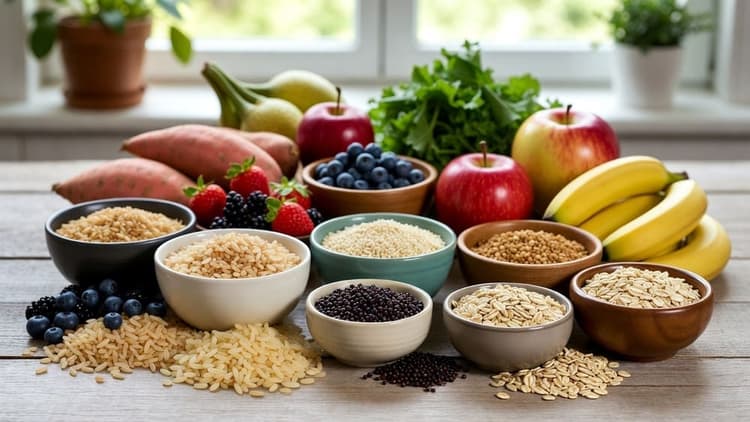
🧠 First: What Are We Actually Talking About? When people say "carbohydrates harm the heart," they usually mean one specific scenario: you eat something sweet or starchy, your blood sugar spikes quickly, and that spike irritates and inflames the inner lining of your blood vessels — including the tiny capillaries (the thinnest blood vessels in your body, thinner than a hair). Over months and years, repeated spikes can harden and narrow those vessels, leading to heart attack, stroke, and poor circulation. But here's the key insight from modern science: not all carbohydrates cause the same blood sugar spike. The type of carb, the amount of fiber in it, how it was cooked, and what you eat alongside it — all of these dramatically change the impact on your vessels. Think of it like fire: a giant bonfire (white bread on empty stomach) versus a slow-burning log (lentils with vegetables). Two important terms you'll see throughout this article: 🔢 Glycemic Index (GI) — a score from 0 to 100 that tells you how fast a food raises blood sugar compared to pure glucose. Low GI = below 55. Medium = 56–69. High = 70+. 📊 Glycemic Load (GL) — a more practical number that combines both the GI and how much of that carb you're actually eating. It's a better real-world measure. 🏆 Top Safest Carbohydrate Foods for Your Heart — Ranked 🥇 Tier 1: The Absolute Champions 1. 🫘 Legumes (Lentils, Chickpeas, Beans, Peas) — GI: 20–40 These are the single best carbohydrate source for heart health, period. A major systematic review and dose-response meta-analysis (2022, covering 26 observational studies with tens of thousands of participants) found that people who ate the most legumes had a 10% lower risk of coronary heart disease (CHD) and a 6% lower risk of overall cardiovascular disease compared to those who ate the least. The sweet spot was around 400 grams per week — that's roughly 4–5 medium servings of cooked beans, lentils, or chickpeas. [8/10, №1] Why do legumes work so well? They contain a special type of fiber (soluble fiber) that behaves like a sponge in your gut — it traps cholesterol and prevents it from entering your bloodstream. A separate meta-analysis of 26 randomized controlled trials (the gold standard of medical research) showed that just one daily serving of pulses (beans, lentils, chickpeas, peas — about 130 grams cooked) reduced "bad" LDL cholesterol by a clinically meaningful amount. Simpler: eating a cup of lentil soup 4–5 days a week can visibly improve your cholesterol numbers within 6 weeks. [8/10, №2] Legumes also have incredibly thick cell walls that resist cooking — meaning their low GI remains low even after boiling. Unlike most starchy foods that get softer (and more blood-sugar-spiking) when you cook them longer, legumes largely hold their structure. [10/10, №3] How to eat them: Boil dried lentils (20–30 min), use canned chickpeas (rinse well), make hummus, add black beans to salads. Eat 3–5 times per week, 150–200g cooked per serving. 2. 🌾 Oats & Barley — GI: 40–60 (depending on preparation) Oats contain a fiber called beta-glucan — one of the most studied substances in heart nutrition. A meta-analysis of 58 randomized trials (nearly 4,000 people) showed that just 3.5 grams per day of oat beta-glucan (roughly 1 bowl of oatmeal) significantly lowered LDL (bad) cholesterol. In terms of numbers: cholesterol dropped by about 0.19 mmol/L on LDL and 0.20 mmol/L on non-HDL cholesterol. That may sound small, but it's clinically meaningful — comparable to some early-stage medication effects. [7/10, №4] A separate large systematic review confirmed that people with high blood pressure who ate oats regularly reduced their systolic blood pressure (the top number) by about 2.82 mmHg on average — and much more in people already diagnosed with hypertension. Remember: a 5 mmHg reduction in systolic pressure cuts major cardiovascular event risk by ~10%. [8/10, №5] The mechanism is simple to understand: beta-glucan makes your gut contents thick and viscous, like eating gel. This slows down how fast glucose from the meal enters your blood — preventing spikes. It also "catches" cholesterol and bile acids before they can be reabsorbed. How to eat them: Classic oatmeal (not instant — that has higher GI), overnight oats, barley soups. Aim for 40–80g of dry oats per serving, 5+ days/week. Key: cook just until soft, not mushy (mushy oats = higher GI). 🥈 Tier 2: Excellent Choices 3. 🌾 Whole Grains (Rye Bread, Buckwheat, Quinoa, Brown Rice) — GI: 40–65 A landmark meta-analysis published in Circulation (American Heart Association journal) analyzed 786,076 people across 14 studies and found that those with the highest whole grain intake had 18% lower cardiovascular mortality compared to those eating the least. In plain numbers: CVD death risk dropped by 18% (relative risk 0.82, 95% CI 0.79–0.85). [8/10, №6] A 2023 meta-analysis in the American Journal of Clinical Nutrition confirmed these findings with newer data: eating whole grains instead of refined grains significantly reduces the risk of coronary heart disease (CHD), cardiovascular disease (CVD), and all-cause mortality. The data showed consistent benefits across different populations. [8/10, №7] The difference between whole grains and refined grains is critical: when you strip a grain of its outer layer (bran) and inner germ to make white flour or white bread, you remove most of the fiber, vitamins, and protective plant compounds. What remains is essentially fast-burning starch that spikes blood sugar. Whole grains keep their protective "armor" intact. Best options ranked by GI (lowest first): Rye bread (intact grain) — GI ~40–45 Buckwheat — GI ~45–50 Quinoa — GI ~53 Brown rice — GI ~55–65 Whole wheat bread (intact grain) — GI ~50–60 How to eat them: Replace white bread with dense rye bread. Use buckwheat or quinoa as a base instead of white rice. Aim for 2–3 servings of whole grains per day (1 serving = ~80g cooked grain or 1 slice dense rye bread). 4. 🥦 Non-Starchy Vegetables — GI: 0–35 Almost all non-starchy vegetables have a GI so low it barely registers. More importantly, they contain polyphenols — plant compounds that directly protect your blood vessel walls (endothelium). Polyphenols work by increasing nitric oxide in your vessels — a natural chemical that keeps vessels relaxed and dilated, prevents blood clots, and blocks inflammation. [7/10, №8] A comprehensive review found that increased dietary fiber from vegetables is linked to a 15–30% reduction in cardiovascular mortality. Every 80g increase in vegetable intake per day reduces CVD risk by 6–10%. [8/10, №9] Best vegetables for vessels (from most evidence to least): 🥦 Broccoli, cauliflower, cabbage, Brussels sprouts (Brassica family) — contain sulforaphane, a powerful anti-inflammatory compound 🧅 Onions & garlic — quercetin and allicin protect blood vessel walls 🍃 Spinach — high in nitrates (naturally converts to nitric oxide → dilates vessels) 🍅 Tomatoes — lycopene reduces LDL oxidation (oxidized LDL is what actually clogs arteries) 🫑 Peppers — extremely high in Vitamin C, which supports collagen in vessel walls 🥕 Carrots — beta-carotene and soluble fiber 🥉 Tier 3: Good with Smart Preparation 5. 🍠 Sweet Potatoes — GI: 44–61 (depends heavily on cooking method!) Sweet potatoes are rich in potassium (which lowers blood pressure), beta-carotene, and resistant starch. Their GI varies enormously based on how you cook them — boiled sweet potato has a GI of about 44, but baked sweet potato jumps to 61+. This is because prolonged dry heat breaks down the cell structure and converts more starch into rapidly-digestible sugars. [6/10, №10] Best preparation: Boil or steam (don't bake). Eat slightly warm or cooled — cooling increases resistant starch content. 6. 🍌 Green (Unripe) Bananas & Plantains — GI: 30–45 Here's a fascinating and counterintuitive fact: an unripe green banana is actually very healthy for your vessels, while a fully ripe yellow-brown banana has a much higher GI (around 51–62). The difference is in resistant starch: green bananas are packed with it, while ripe bananas have converted most of that resistant starch into simple sugars. Resistant starch acts like fiber — it feeds good gut bacteria, produces anti-inflammatory compounds, and slows glucose absorption. [5/10, №11] ⚠️ This is a fact with moderate evidence — interesting and supported by mechanistic studies, but large cardiovascular outcome trials specifically on banana ripeness don't yet exist. 7. 🥔 Potatoes (When Prepared Correctly) — GI: 35–95 (HUGE range!) This is the most misunderstood food on this list. A potato's glycemic impact depends almost entirely on HOW you prepare it. Hot baked potato: GI ~85 (as bad as white bread). The same potato boiled and then refrigerated overnight: GI ~35–56. That's a 2.5x difference — from the same food! The science behind this: cooking then cooling a potato causes its starch molecules to rearrange into a form called "retrograded starch" or "resistant starch type 3." Your digestive enzymes cannot break it down, so it passes through like fiber — slowly fermented by gut bacteria. [7/10, №12] A 2025 randomized controlled trial (published in 2025) directly compared white potatoes versus white rice for cardiovascular health in people with type 2 diabetes over 12 weeks. Results showed no significant difference in endothelial function (vessel flexibility) between the two — suggesting that a properly prepared potato is not inherently worse than rice. [7/10, №13] Best preparation: Boil whole (with skin if possible) → refrigerate overnight → eat cold (potato salad) or reheat gently. This creates the most resistant starch and the lowest GI possible. 🔬 The Glycemic Index: Your Practical Cheat Sheet Here is a comparison table of common carbohydrate foods by their GI and approximate cardiovascular safety: Food GI Safety Lentils (boiled)~25✅✅✅ Chickpeas (boiled)~28✅✅✅ Rye bread (whole grain, dense)~40✅✅✅ Oatmeal (rolled oats, cooked 5 min)~42✅✅✅ Buckwheat (boiled)~45✅✅ Quinoa~53✅✅ Brown rice~55✅✅ Sweet potato (boiled)~44✅✅ Potato (boiled, cooled overnight)~35–56✅✅ White pasta (al dente)~40–50✅ White rice~72⚠️ White bread~75⚠️⚠️ Potato (baked, hot)~85⚠️⚠️ Instant oatmeal (packet)~66–79⚠️ 🍳 Cooking Methods: How Preparation Changes Everything This is perhaps the most practical and underappreciated section of this article. The same food can be heart-friendly or harmful depending on how you prepare it. ✅ Methods that LOWER glycemic impact: 🥶 Cook → Cool → Reheat — The single most powerful trick. When you boil rice, pasta, or potatoes and then refrigerate them overnight, the starch restructures into "resistant starch" — a form that behaves like fiber. Cooling overnight can lower the GI of white rice by 10–15%. Reheating gently preserves some (but not all) of this benefit. [7/10, №12] 🌊 Steaming vs. Boiling vs. Baking — Steaming and boiling preserve the natural fiber structure of vegetables better than baking or roasting. Baking at high temperatures caramelizes sugars and breaks down fiber — raising GI. For grains and legumes: boiling is best. [6/10, №10] ⏱️ Al Dente (Slightly Undercooked) — Pasta, grains, and vegetables cooked al dente (still slightly firm) have meaningfully lower GI than overcooked, soft versions. Overcooking breaks down starch granules, making them easier to digest rapidly. For pasta: 8 minutes instead of 12 minutes can lower GI by 10–20 points. [6/10, №10] 🍋 Add Acid (Vinegar or Lemon Juice) — Adding 1–2 tablespoons of apple cider vinegar or fresh lemon juice to a meal significantly slows stomach emptying and reduces the blood sugar spike. A 46% reduction in glycemic response was observed in one study when switching from a high-GI breakfast to a lower-GI one with added fiber — and acid was part of that equation. [6/10, №14] 🫒 Add Healthy Fat or Protein First — Eating fat or protein before or alongside carbohydrates dramatically slows digestion. The classic example: drizzling olive oil on bread before eating it substantially reduces the blood sugar spike compared to eating the bread alone. [7/10, №14] ❌ Methods that RAISE glycemic impact (avoid or minimize): 🔥 Deep Frying — Creates advanced glycation end products (AGEs) — compounds that directly damage blood vessel walls and promote inflammation. This is worse than the sugar spike itself. Fried potatoes, fried rice, fried dough = triple negative effect. ⏳ Overcooking — The longer you cook starch in hot water, the more it swells and breaks down into easily-digestible, fast-absorbing glucose. Soft, mushy oatmeal spikes blood sugar faster than firm-cooked oatmeal. 🌡️ High-temperature baking without fiber — White bread, croissants, pastries. The Maillard reaction (browning) creates AGEs and breaks down fiber structure simultaneously. 🤝 Food Combinations That Protect Your Vessels One of the most evidence-backed strategies for reducing carbohydrate harm is not just what you eat, but what you eat it WITH. Fiber + Carbs: Adding vegetables (especially raw or lightly cooked) to any carb-heavy meal significantly lowers the total glycemic response. Eating a bowl of pasta with a large side of broccoli is fundamentally different from eating pasta alone. A meal with 4.9g fiber vs. one with 2.2g fiber produced a 46% reduction in blood sugar response in controlled studies. [6/10, №14] Protein + Carbs: Adding protein (eggs, legumes, lean meat, Greek yogurt) to carbohydrates slows digestion and reduces blood glucose peaks. This is why lentil soup is "safer" than plain white bread even if calorie counts are similar — lentils are both protein and fiber together. Healthy Fats + Carbs: Olive oil, avocado, and nuts slow gastric emptying. In the PREDIMED trial — one of the landmark Mediterranean diet studies — adding olive oil and nuts to a diet that included carbohydrates produced dramatic cardiovascular benefits compared to a low-fat diet. [9/10, №15] Vinegar + Carbs: Even a tablespoon of vinegar in a salad dressing eaten with or before a starchy meal measurably lowers the blood sugar peak. [5/10, №14] 🔍 Curious Facts with Lower (But Real) Evidence The following facts are supported by real studies but with smaller sample sizes or less conclusive designs. They're included because they're interesting and potentially valuable — just view them with appropriate skepticism. 🍌 Green banana resistance: Green unripe bananas contain around 35–40% resistant starch by dry weight — which is extraordinarily high. When cooked (boiled green banana is eaten widely in the Caribbean and Africa), this starch mostly survives digestion and feeds beneficial gut bacteria. Some animal studies and small human trials suggest this may reduce LDL cholesterol. Large cardiovascular outcome trials in humans don't yet exist, but the mechanism is solid. [5/10, №11] 🍚 Rice + Resistant Starch and Blood Vessels: A randomized double-blind placebo-controlled study (the gold standard!) found that when people with pre-diabetes ate rice containing extra resistant starch for 4 weeks, their endothelial function (how well blood vessels dilate) improved significantly. A marker of vessel constriction dropped 12.5% in the resistant starch group vs. 4.4% in the control group. Nitric oxide (a vessel-dilating molecule) also increased. [7/10, №13] 🫙 Pressure cooking legumes: Pressure-cooked beans and lentils retain slightly more of their resistant starch and have a marginally lower GI than long-boiled versions. More practically, they're faster to cook (15–20 min vs. 40–60 min), so you're more likely to actually eat them. Evidence on cardiovascular outcomes specifically from pressure-cooked vs. boiled legumes is limited, but the GI data is real. [4/10, expert consensus] 🌡️ Cold pasta salad trick: Cold pasta (cooked, cooled, eaten cold as a salad) has a GI of around 35–45 — dramatically lower than hot freshly-cooked pasta. The cooling process creates resistant starch. Mashed potatoes served cold (potato salad) similarly show up to 40% lower glycemic impact than hot mashed potatoes. [5/10, №12] 📋 What Actually Works (Summary Table) Method / Food Effect on Cardiovascular Risk Evidence Level Legumes (lentils, beans, chickpeas) 4–5x/week↓ CHD risk by ~10%, ↓ LDL cholesterol8/10 — Meta-analysis of 26 studies Oats / oat beta-glucan ≥3.5g/day↓ LDL cholesterol, ↓ systolic blood pressure7–8/10 — Meta-analyses of 58 RCTs Whole grains instead of refined grains↓ CVD mortality by 18%, ↓ CHD risk8/10 — Meta-analysis, 786,076 people High dietary fiber (≥25g/day)↓ CVD mortality by 26%, ↓ all-cause mortality8/10 — Systematic review, 3.5 million subjects Cook-cool-reheat starchy carbs↓ GI by 15–40%, improved endothelial function7/10 — RCT evidence Eat protein/fat before or with carbs↓ postprandial glucose spike significantly7/10 — Multiple RCTs Add vinegar or lemon juice to meals↓ glycemic response measurably5–6/10 — Small RCTs Al dente cooking for pasta/grains↓ GI vs. overcooked versions6/10 — Controlled studies ❌ What Does NOT Work (Despite Popularity) Method / Food Reality Evidence Level Instant oatmeal packets (flavored)GI nearly as high as white bread; added sugar negates benefits7/10 — Controlled GI testing "Multigrain" white breadMultiple grains but all finely ground = still high GI; not the same as whole grain8/10 — Nutritional analysis studies Brown rice as a magic fixGI of brown rice is only slightly lower than white (55 vs 72); not a dramatic improvement without other strategies7/10 — Direct GI comparisons Fruit juice instead of whole fruitRemoves fiber completely → same sugar as soda, no GI benefit; spikes blood sugar fast8/10 — Multiple cohort studies Gluten-free products for cardiovascular benefitMost GF products use refined rice/potato/corn starch — often higher GI than regular bread; no CVD benefit for non-celiac individuals8/10 — Clinical Nutrition review 🛠️ Your Practical Daily Action Plan 🌅 Morning: Real rolled oats (not instant packets), cooked 5 minutes — slightly al dente. Add a tablespoon of ground flaxseed (extra fiber + omega-3). Optionally a small handful of berries. 🍽️ Main meals: Build your plate as follows — ½ non-starchy vegetables (broccoli, spinach, peppers, tomatoes), ¼ quality protein (eggs, fish, legumes), ¼ safe carbohydrate (lentils, buckwheat, brown rice, boiled/cooled potato). 🫘 Legumes 4–5x per week: Lentil soup, chickpea stew, hummus with raw vegetables, black bean salad. Target ~150–200g cooked per serving. 🧊 Batch cook & refrigerate: Cook a large batch of rice, potatoes, or pasta on Sunday → refrigerate → eat throughout the week. The cooling process is doing the cardiovascular work for you. 🍋 Add acid first: Start meals with a small salad dressed with olive oil + vinegar, or squeeze lemon juice over your vegetables. This takes 30 seconds and measurably reduces blood sugar spikes. ⚠️ Replace, don't just add: The biggest gain comes from REPLACING white bread, white rice, and pastries with the options above — not adding them on top. 📚 List of Sources Used Intake of Legumes and Cardiovascular Disease: A Systematic Review and Dose–Response Meta-Analysis. Type: Systematic review & meta-analysis (26 observational studies). Trust: 8/10. Published in Nutrition, Metabolism and Cardiovascular Diseases, 2022. DOI: 10.1016/j.numecd.2022.10.014 Effect of Dietary Pulse Intake on Lipid Targets for Cardiovascular Risk Reduction: Meta-Analysis of RCTs. Type: Meta-analysis of 26 RCTs. Trust: 8/10. Published in CMAJ, PMC. PMC4016088 Low Glycaemic Index Diets for the Prevention of Cardiovascular Disease (Cochrane-linked Review). Type: Systematic review. Trust: 10/10. PMC. PMC6483287 The Effect of Oat β-glucan on LDL-Cholesterol, Non-HDL-Cholesterol and ApoB: Systematic Review & Meta-Analysis. Type: Meta-analysis of 58 RCTs (n=3,974). Trust: 7/10. Published in British Journal of Nutrition, 2016. Cambridge Core Effect of Oat Consumption on Blood Pressure: Systematic Review and Meta-Analysis of RCTs. Type: Meta-analysis. Trust: 8/10. Published in American Journal of Clinical Nutrition, 2022. ScienceDirect Whole Grain Intake and Mortality from All Causes, Cardiovascular Disease, and Cancer. Type: Meta-analysis of 14 cohort studies (n=786,076). Trust: 8/10. Published in Circulation (AHA), 2016. Circulation / AHA Journals Consumption of Whole Grains and Refined Grains and Associated Risk of CVD: Meta-Analysis of Prospective Cohort Studies. Type: Systematic review & meta-analysis. Trust: 8/10. Published in American Journal of Clinical Nutrition, 2023. DOI: 10.1016/j.ajcnut.2022.10.010 Vegetables and Glycemic Index: Exploring Their Correlation and Health Implications. Type: Retrospective study + review. Trust: 7/10. Published in Foods (MDPI), 2025. MDPI Foods Dietary Fiber Intake and All-Cause and Cause-Specific Mortality: Updated Systematic Review and Meta-Analysis. Type: Meta-analysis (64 studies, n=3,512,828). Trust: 8/10. Published in Clinical Nutrition, 2023. Clinical Nutrition Journal Culinary Strategies to Manage Glycemic Response: Narrative Review. Type: Narrative review. Trust: 6/10. Published in Frontiers in Nutrition, 2022. Frontiers in Nutrition Cooling Some Foods After Cooking Increases Their Resistant Starch. Trust: 5/10 (aggregator citing primary studies). Healthline, 2024. Healthline Effect of Cooling of Cooked White Rice on Resistant Starch Content and Glycemic Response. Type: RCT. Trust: 7/10. Published in Asia Pacific Journal of Clinical Nutrition. PubMed Dietary Treatment with Rice Containing Resistant Starch Improves Markers of Endothelial Function. Type: Randomized double-blind placebo-controlled trial (n=90). Trust: 7/10. Published in Atherosclerosis, 2012. PubMed Culinary Strategies to Manage Glycemic Response (fiber + acid combinations). As source №10 above. Frontiers in Nutrition PREDIMED Trial — Primary Prevention of Cardiovascular Disease with Mediterranean Diet. Type: RCT (n=7,447). Trust: 9/10. Published in New England Journal of Medicine, 2013 (corrected 2018). NEJM

February 20, 2026

→
Stomach Acid and Nutrition: Digestive Health
Nutrition

Stomach Acid and Nutrition: Digestive Health

🍽️ A Simple Guide for Everyone - Understanding What Actually Works 📖 INTRODUCTION: UNDERSTANDING YOUR STOMACH Your stomach is like a powerful chemical factory. It produces hydrochloric acid - one of the strongest acids in your body with a pH between 1-3 (that's about as acidic as battery acid!). This might sound scary, but it's actually essential for your health. This acid kills harmful bacteria in your food, breaks down proteins so your body can use them, and helps you absorb important vitamins like B12 and minerals like iron. [6/10, №1] Your stomach produces about 1.5 liters of gastric juice daily. The acid is so strong (pH 0.8-3.0) that it's 100,000 times more acidic than your blood, yet your stomach has a special protective lining of mucus and bicarbonate that prevents it from digesting itself. [6/10, №1] 🩺 WHAT IS GASTRIC REFLUX (GERD)? Simple Explanation: Imagine your esophagus (the tube from your mouth to stomach) is like a one-way street. At the bottom, there's a muscular ring called the lower esophageal sphincter (LES) - think of it as a door that only opens to let food IN to your stomach, then closes tight. When this "door" becomes weak or relaxes too often, stomach acid flows backward (refluxes) into your esophagus, causing that burning feeling called heartburn. [8/10, №2] 🔧 What Causes the "Door" to Malfunction? The LES can weaken due to several factors: Hiatal Hernia: Part of your stomach pushes up through your diaphragm (the muscle separating chest and abdomen), putting pressure on the LES. About 10-20% of adults have GERD. [8/10, №2] Increased Abdominal Pressure: From obesity, pregnancy, or tight clothing. Being overweight increases GERD risk by 1.7 times compared to normal weight individuals. [7/10, №3] Delayed Gastric Emptying: When food stays in your stomach too long (seen in about 26% of GERD patients), pressure builds up and forces acid upward. [7/10, №4] Transient LES Relaxations (TLESRs): These are inappropriate relaxations of the sphincter that aren't related to swallowing - they're the main cause of reflux episodes. [7/10, №4] ⚠️ What Makes It Worse: Lying down after eating (gravity normally helps keep acid down) Large meals (increase stomach pressure) Certain medications (calcium channel blockers, benzodiazepines, tricyclic antidepressants) Smoking and alcohol (relax the LES) Specific foods (we'll cover this below) [7/10, №5] 🥗 FOODS THAT INCREASE STOMACH ACID PRODUCTION These foods stimulate your stomach to produce MORE acid: 🍖 PROTEIN-RICH FOODS (The Biggest Stimulators) Why: Proteins trigger the most gastric acid secretion - about 60% of total acid production occurs during meals, mainly stimulated by amino acids (the building blocks of protein). [6/10, №1] Examples: Meat (beef, pork, chicken, fish) Eggs Dairy products (cheese, milk, yogurt) Evidence: Amino acids directly stimulate acid production, and a high-protein diet can prolong gastric emptying time, potentially increasing reflux risk in susceptible individuals. However, interestingly, some amino acids like glutamine may actually help HEAL the stomach lining. [7/10, №6] The effect is complex and individual. ☕ COFFEE (Including Decaf!) Surprising Fact: Many people think caffeine is the problem, but research shows BOTH regular AND decaffeinated coffee stimulate significant acid production. Decaf coffee produces almost as much acid as regular coffee (16.5 vs 20.9 mEq per hour). [8/10, №7] Practical Advice: If coffee bothers your stomach, switching to decaf won't help much. Try reducing overall coffee consumption instead. [8/10, №7] 🍷 ALCOHOL How It Works: Wine and beer are particularly potent acid stimulators. Alcohol also relaxes the LES, creating a double problem - more acid production AND easier backflow. People who drink 3-5 times per week have almost DOUBLE the chance of developing GERD. [6/10, №8] Evidence Level: Strong association found in meta-analysis of 30 studies. [6/10, №8] 🥛 MILK - A CONTROVERSIAL CASE The Paradox: Milk temporarily INCREASES stomach pH (makes it less acidic) for about 3 minutes, providing quick relief. BUT it also stimulates acid production afterward, potentially making heartburn worse later. [7/10, №9] Practical Tip: Skim or low-fat milk is better than whole milk because the fat in whole milk can aggravate reflux. Use milk for immediate relief only if needed. [6/10, №2] 🍎 FOODS THAT MAY HELP REDUCE ACID OR PROTECT THE STOMACH 🌾 HIGH-FIBER FOODS ⭐⭐⭐ How They Work: Fiber makes you feel full longer, preventing overeating (a major GERD trigger). Fiber also promotes healthy gut bacteria and may improve esophageal muscle function. [7/10, №4] Best Evidence: A study on patients with non-erosive reflux disease showed fiber-enriched diets improved esophageal motility and increased lower esophageal sphincter pressure. [7/10, №4] What to Eat: Whole Grains: Oatmeal (4g fiber per cup), brown rice, whole wheat bread Vegetables: Broccoli, asparagus, green beans, carrots, sweet potatoes Fruits: Bananas, apples (choose non-acidic fruits) [6/10, №2] Daily Target: Men under 50 need 31g daily; women need 25g daily. Most Americans only get half this amount. [6/10, №10] 🍌 BANANAS 🍌 Why They Help: Bananas are alkaline (pH above 7) and contain pectin, a soluble fiber that helps food move through your digestive system properly. They may also help strengthen the protective mucous layer of the esophagus. [7/10, №4] Evidence: Research suggests bananas can neutralize stomach acid and create a protective coating on the esophageal lining. [6/10, №11] How to Use: Eat ripe bananas as a snack or add to oatmeal in the morning. 🥣 OATMEAL & BETA-GLUCANS 🥣 ⭐⭐⭐⭐ The Science Behind "Coating": This is where the kissel (traditional oat drink) belief has some truth! Oats contain beta-glucans - special soluble fibers that form a GEL-LIKE substance when mixed with water. [7/10, №12] What the Research Shows: High molecular weight oat beta-glucans REDUCED mucosal damage in chronic gastritis patients after 30 days (48 patients studied). [7/10, №12] Beta-glucans improved antioxidant defense in the blood and increased beneficial short-chain fatty acids in the gut. [7/10, №12] The mucilaginous (gel-forming) properties DO create a soothing coating effect in the digestive tract. [7/10, №13] Practical Use: Steel-cut or rolled oats are best (NOT instant oatmeal with added sugars) Cook with water: The beta-glucans need water to form the protective gel Eat 1 cup cooked oatmeal (provides 4g fiber, about 3g beta-glucan) Can add bananas, honey, or cinnamon for flavor [7/10, №12] Note: Oatmeal helps slow digestion and may reduce stomach acid production by creating a physical buffer, though it won't permanently "coat" your stomach like plastic wrap. [6/10, №14] 🌿 OTHER MUCILAGINOUS HERBS (Slippery Elm & Marshmallow Root) What Are They: These herbs contain mucilage - thick, gel-like polysaccharides that swell when mixed with water, creating a soothing coating. Evidence Level: Mostly traditional use and limited clinical studies. [4/10, №15] How They Might Work: The mucilage forms a protective barrier over irritated tissues in the esophagus and stomach, potentially protecting against acid damage. Some laboratory studies show they can protect probiotic bacteria from gastric acid. [5/10, №16] Practical Information: Available as powders, capsules, or teas Slippery elm: 400-500mg capsules 3x daily or 1-2 tablespoons powder in water Marshmallow root: 2-4g of dried root as tea, 3x daily Take 30-60 minutes before meals for best coating effect [4/10, №15] Important: Limited high-quality research exists. These are generally safe but should not replace medical treatment for serious conditions. [4/10, №17] 🫚 GINGER 🫚 Traditional Use: Known for anti-inflammatory and digestive properties for centuries. What Research Shows: Ginger is alkaline and may help ease irritation in the digestive tract. However, some studies suggest it might WORSEN reflux in certain people by increasing stomach motility. [6/10, №2] Recommendation: Try ginger tea in small amounts to see how YOUR body responds. Everyone is different. [6/10, №2] 🥛 LOW-FAT YOGURT (with Probiotics) The Good: Probiotics may help regulate gut function and reduce acidity. One review showed yogurt containing probiotics helped reduce acidity. [6/10, №11] The Complication: In a 2023 survey study in China, yogurt was one of the most commonly reported TRIGGERS for reflux symptoms. [6/10, №11] Conclusion: Very individual - some people benefit, others have worse symptoms. Choose LOW-FAT varieties and test carefully. [6/10, №11] 🥬 ALKALINE FOODS Theory: Foods with higher pH (more alkaline) can theoretically help neutralize stomach acid. Examples: Leafy greens (spinach, kale) Melons Almonds [6/10, №2] Evidence Quality: Mostly theoretical with limited clinical trials specifically testing alkaline diets for GERD. [6/10, №2] ❌ FOODS THAT WORSEN REFLUX (TRIGGER FOODS) 🍔 HIGH-FAT FOODS ⚠️⚠️⚠️ Why They're Bad: Slow gastric emptying (food sits in stomach longer) Relax the lower esophageal sphincter Increase esophageal acid exposure time Evidence: A systematic review found high-fat diets had an odds ratio of 7.57 for GERD - meaning people eating high-fat diets were 7.5 times more likely to have GERD. [7/10, №18] What to Avoid: Fried foods (french fries, fried chicken) Fatty meats (bacon, sausage, high-fat beef) Full-fat dairy (whole milk, cream, butter) Processed foods high in saturated fats [7/10, №18] What to Choose Instead: Grilled or baked chicken breast (skinless) Fish (salmon, cod, tilapia) Turkey Low-fat or plant-based alternatives [6/10, №2] 🍅 ACIDIC FOODS The List: Citrus fruits (oranges, lemons, grapefruit) Tomatoes and tomato-based products (sauce, ketchup) Vinegar The Controversy: Evidence is MIXED. Some studies show acidic foods worsen symptoms, others show no effect or even benefits. [6/10, №8] Interesting Finding: A 2018 study on 130 patients found that a diet ENRICHED with acidic foods (lemon, tomato) combined with low carbohydrates actually REDUCED heartburn symptoms. The theory: Adding acid to the stomach may signal it to STOP producing more acid. [5/10, №19] *This is controversial and needs more research.* Practical Advice: Try eliminating acidic foods for 2 weeks, then reintroduce one at a time to see YOUR individual response. [6/10, №2] 🍫 CHOCOLATE, PEPPERMINT, ALCOHOL Why: All three relax the lower esophageal sphincter, making reflux more likely. [7/10, №5] 🥤 CARBONATED DRINKS Mechanism: Create gas/pressure in the stomach, which can force the LES open and push acid upward. [6/10, №2] Evidence: Observational studies, though one systematic review found no strong evidence carbonated beverages promote GERD. [7/10, №20] *More research needed.* 🌶️ SPICY FOODS Effect: May irritate an already inflamed esophagus. Contains capsaicin which can increase sensitivity to acid. [7/10, №21] Note: Doesn't cause reflux in everyone - very individual. [7/10, №21] 💧 THE MYTH OF DILUTING STOMACH ACID WITH WATER The Common Belief: "Don't drink water with meals - it dilutes your stomach acid and ruins digestion." What Science Actually Shows: This is largely a MYTH. ⭐⭐⭐ 📊 The Real Story: 1. Water DOES Temporarily Raise Stomach pH: A study of 12 healthy people found drinking 200ml water increased gastric pH above 4 in 10 out of 12 subjects within 1 minute. BUT this effect lasted only about 3 MINUTES before stomach pH returned to normal. [7/10, №22] 2. Your Stomach Has Built-in Regulation: Sensor cells in your stomach detect pH changes When pH rises (becomes less acidic), they trigger MORE acid production to restore normal levels This happens within minutes - your stomach is VERY good at maintaining its acidity [6/10, №23] 3. The Buffer Capacity: Your stomach has a "buffer capacity" - the ability to quickly produce more acid when needed Even drinking 1 liter of water only minimally and temporarily affects pH [6/10, №23] 4. Water Actually HELPS Digestion: Helps break down large chunks of food Moves food through the digestive system Prevents bloating and constipation Stimulates production of digestive enzymes and acid when food is present [6/10, №24] 5. No Scientific Evidence of Harm: Multiple studies have found NO negative effect of drinking water with meals on digestion or nutrient absorption Water DOES pass through your stomach faster than solid food, but it doesn't affect how fast solid food digests [6/10, №24] 🚫 The One Exception: For people with active GERD, drinking LARGE amounts of water during meals might: Fill the stomach faster Increase stomach pressure Potentially relax the LES temporarily Recommendation: If you have severe GERD, sip small amounts of water with meals rather than gulping large quantities. Drink most of your water BETWEEN meals. [6/10, №25] 🎯 Bottom Line: For healthy people: Drink water whenever you want. Your body is smarter than this old myth. [6/10, №23] For GERD patients: Moderate your water intake during meals, but don't avoid it completely. [6/10, №25] 🎯 WHAT ACTUALLY WORKS: EVIDENCE-BASED STRATEGIES ✅ FOR REDUCING REFLUX SYMPTOMS: 1. WEIGHT LOSS (if overweight) ⭐⭐⭐⭐⭐ Evidence: Randomized controlled trials show weight loss decreased esophageal acid exposure from 5.6% to 3.7% and from 8.0% to 5.5%. [8/10, №26] Effect Size: Large, consistent benefit Evidence Level: 8/10 (Multiple RCTs) How Much: Even modest weight loss (5-10% of body weight) can help 2. LOW-CARBOHYDRATE DIET ⭐⭐⭐⭐ Evidence: Meta-analysis showed significant reduction in esophageal acid exposure time (mean difference of -2.8%). [7/10, №27] Mechanism: May reduce fermentation in gut, decrease gas/bloating, speed gastric emptying Evidence Level: 7/10 (Systematic review with meta-analysis) Practical: Focus on vegetables, lean proteins, healthy fats; reduce bread, pasta, rice, sugars 3. ELEVATE HEAD OF BED ⭐⭐⭐⭐ Evidence: Randomized controlled trial showed 10-inch wedge decreased nighttime acid exposure from 21% to 15%. [7/10, №26] Evidence Level: 7/10 (RCT) How: Use a wedge pillow or raise the head of the entire bed frame (not just regular pillows) 4. AVOID LATE-NIGHT EATING ⭐⭐⭐⭐ Evidence: Early evening meals decreased esophageal acid exposure in RCTs. Eating less than 3 hours before bed increased GERD risk 7.45 times. [7/10, №26, №18] Evidence Level: 7/10 (Multiple studies) Practical: Finish dinner at least 3-4 hours before bedtime 5. INCREASE DIETARY FIBER ⭐⭐⭐ Evidence: Multiple studies show fiber reduces reflux symptoms and improves esophageal motility. [7/10, №26] Evidence Level: 7/10 Target: 25-31g daily from whole grains, vegetables, fruits 6. QUIT SMOKING ⭐⭐⭐⭐ Evidence: Large prospective study showed reduced reflux symptoms with smoking cessation in normal-weight individuals. [7/10, №26] Evidence Level: 7/10 Effect: Smoking weakens LES and reduces mucus protection 7. REDUCE/ELIMINATE ALCOHOL ⭐⭐⭐ Evidence: Meta-analysis of 30 studies showed 1.5x higher odds of GERD in drinkers; frequent drinking (3-5x/week) nearly doubles risk. [6/10, №8] Evidence Level: 6/10 Practical: Limit to special occasions or eliminate completely if symptomatic 8. SMALLER, MORE FREQUENT MEALS ⭐⭐⭐ Evidence: Observational studies show large meals increase stomach pressure and reflux risk. [7/10, №18] Evidence Level: 6/10 (Observational) Practical: Eat 4-5 smaller meals instead of 2-3 large ones ❌ WHAT DOESN'T WORK (Despite Popularity) 1. SPECIFIC "TRIGGER FOOD" ELIMINATION (except for high-fat) ⚠️ Method: Avoiding all chocolate, citrus, tomatoes, coffee, etc. Evidence: Current guidelines say to eliminate foods ONLY if they clearly trigger YOUR symptoms. Sequential elimination of ALL traditional "trigger foods" is not well-supported. [8/10, №28] Evidence Level: 5/10 (Weak, inconsistent evidence) Why: Individual responses vary GREATLY. What triggers one person doesn't affect another. 2. APPLE CIDER VINEGAR FOR REFLUX ⚠️⚠️ Method: Drinking diluted apple cider vinegar to "balance" stomach acid Evidence: No peer-reviewed studies prove it works. Anecdotal reports only. Strong acid could irritate esophagus. [6/10, №2] Evidence Level: 2/10 (Anecdotal only) Risk: May worsen symptoms in some people 3. DRINKING WATER RUINS DIGESTION ❌ Method: Avoiding water with meals Evidence: Multiple studies show no harm from drinking water with meals. Temporary pH change lasts only 3 minutes. [7/10, №22] Evidence Level: 2/10 for the myth (Strong evidence AGAINST it) 4. SLOW EATING SPEED (for reducing reflux events) ⚠️ Method: Eating very slowly to prevent reflux Evidence: Meta-analysis found NO reduction in reflux events with slow eating compared to normal pace. [7/10, №27] Evidence Level: 4/10 (Did not show benefit in meta-analysis) Note: May still help with overeating/portion control 5. ALKALINE WATER/EXTREME ALKALINE DIET ⚠️ Method: Drinking high-pH alkaline water or eating only alkaline foods Evidence: Very limited research on long-term effects; body tightly regulates blood pH regardless of diet. Evidence Level: 3/10 (Insufficient evidence) 6. PEPPERMINT FOR REFLUX ⚠️⚠️ Method: Using peppermint tea to soothe digestive issues Evidence: May actually WORSEN reflux by relaxing the lower esophageal sphincter. [6/10, №2] Evidence Level: 5/10 (Some evidence it may worsen symptoms) 📋 SUMMARY TABLE: WHAT WORKS METHOD EFFECT EVIDENCE LEVEL Weight loss (if overweight) Reduces acid exposure 30-40% 8/10 - Multiple RCTs ⭐⭐⭐⭐⭐ Low-carb diet Reduces acid exposure 2.8% 7/10 - Meta-analysis ⭐⭐⭐⭐ Elevate head of bed Reduces nighttime reflux 6% 7/10 - RCT ⭐⭐⭐⭐ Avoid eating 3hr before bed Reduces risk 7.5x 7/10 - Multiple studies ⭐⭐⭐⭐ Stop smoking Reduces symptoms 7/10 - Prospective study ⭐⭐⭐⭐ High fiber diet (25-31g/day) Improves symptoms, motility 7/10 - Multiple studies ⭐⭐⭐ Oat beta-glucans (3g/day) Reduces mucosal damage 7/10 - Clinical trial ⭐⭐⭐ Reduce alcohol Reduces risk 1.5x 6/10 - Meta-analysis ⭐⭐⭐ Smaller meals Reduces pressure 6/10 - Observational ⭐⭐⭐ Bananas May neutralize acid 6/10 - Limited studies ⭐⭐ 📋 SUMMARY TABLE: WHAT DOESN'T WORK METHOD EFFECT EVIDENCE LEVEL Drinking water dilutes acid NO meaningful dilution 2/10 - MYTH disproven ❌ Apple cider vinegar No proven benefit 2/10 - Anecdotal only ⚠️ Alkaline water Insufficient evidence 3/10 - Limited research ⚠️ Slow eating for reflux NO reduction in events 4/10 - Meta-analysis negative ⚠️ Blanket food elimination Inconsistent results 5/10 - Individual variation ⚠️ Peppermint for reflux May WORSEN symptoms 5/10 - May relax LES ⚠️⚠️ 🎬 FINAL PRACTICAL TAKEAWAYS ✅ DO THESE: Lose weight if overweight - This is the single most effective intervention Try a lower-carb diet - Focus on vegetables, lean proteins, healthy fats Elevate your bed's head - Use a wedge or blocks (6-10 inches) Stop eating 3-4 hours before bed - Give your stomach time to empty Eat more fiber - 25-31g daily from whole grains, vegetables, fruits Eat oatmeal - The beta-glucans genuinely help (use steel-cut or rolled, not instant) Stop smoking and reduce alcohol - Both significantly worsen reflux Keep a food diary - Track YOUR individual triggers ❌ DON'T WORRY ABOUT: Drinking water with meals - Your stomach can handle it just fine Following extreme "trigger food" lists - Only eliminate what clearly bothers YOU Drinking alkaline water - Little evidence it helps Apple cider vinegar - No proven benefit, may irritate 🤔 TEST THESE INDIVIDUALLY: Bananas (many find them helpful) Ginger (helps some, worsens for others) Low-fat yogurt (very individual response) Acidic foods (remove for 2 weeks, then test one at a time) ⚠️ WHEN TO SEE A DOCTOR Seek medical help if you experience: Heartburn 2+ times per week Difficulty swallowing Persistent nausea or vomiting Unintended weight loss Blood in stool (may be dark/tarry) Severe chest pain (rule out heart attack!) Symptoms don't improve with lifestyle changes after 2-3 weeks GERD can lead to serious complications like esophageal ulcers, strictures (narrowing), and Barrett's esophagus (a precancerous condition) if left untreated. [8/10, №2] 💡 REMEMBER: Your body is remarkably good at regulating itself. The key is: Evidence over myths Individual responses matter - what works for others might not work for you Lifestyle changes take time - give modifications 2-4 weeks to show effects Medical supervision for persistent symptoms - GERD is treatable This guide provides EVIDENCE-BASED information to help you make informed decisions about your digestive health! 📚 LIST OF SOURCES USED №1. Wikipedia - "Gastric Acid" - General reference on gastric physiology. Trust: 6/10. URL: https://en.wikipedia.org/wiki/Gastric_acid №2. Johns Hopkins Medicine - "GERD Diet: Foods That Help with Acid Reflux" - Clinical guidance from major medical center. Trust: 6/10 (Clinical institution but not peer-reviewed research). URL: https://www.hopkinsmedicine.org/health/wellness-and-prevention/gerd-diet-foods-that-help-with-acid-reflux-heartburn №3. StatPearls/NCBI - "Gastroesophageal Reflux Disease" - Medical textbook chapter, peer-reviewed. Trust: 7/10 (Evidence-based medical reference). URL: https://www.ncbi.nlm.nih.gov/books/NBK554462/ №4. PMC/NCBI - "Functional Food in Relation to Gastroesophageal Reflux Disease (GERD)" - Peer-reviewed systematic review. Trust: 7/10. URL: https://pmc.ncbi.nlm.nih.gov/articles/PMC10458865/ №5. Cleveland Clinic - "Acid Reflux & GERD" - Clinical guidance from major medical center. Trust: 7/10. URL: https://my.clevelandclinic.org/health/diseases/17019-acid-reflux-gerd №6. Frontiers in Immunology - "The relationship between amino acids and gastroesophageal reflux disease" - Peer-reviewed research. Trust: 7/10 (Published January 2025). URL: https://www.frontiersin.org/journals/immunology/articles/10.3389/fimmu.2025.1420132/full №7. New England Journal of Medicine - "Gastric Acid Secretion and Lower-Esophageal-Sphincter Pressure in Response to Coffee and Caffeine" - Original research from NEJM. Trust: 8/10 (NEJM is a top-tier journal). URL: https://www.nejm.org/doi/full/10.1056/NEJM197510302931803 №8. MDPI Nutrients - "Updates in Gastroesophageal Reflux Disease Management" - Peer-reviewed comprehensive review. Trust: 6/10 (Open-access journal, published April 2025). URL: https://www.mdpi.com/2624-5647/7/2/33 №9. PubMed - "New food approaches to reduce gastric acidity" - Research study on dietary interventions. Trust: 5/10 (Small study, 130 patients, published 2018). URL: https://pubmed.ncbi.nlm.nih.gov/29729504/ №10. Medical News Today - "Eight foods to quickly neutralize stomach acidity" - Health information site. Trust: 6/10 (Cites research but secondary source). URL: https://www.medicalnewstoday.com/articles/what-foods-neutralize-stomach-acid-immediately №11. Medical News Today - "Eight foods to neutralize stomach acid" - Health review citing 2023 research on bananas, yogurt. Trust: 6/10. URL: https://www.medicalnewstoday.com/articles/what-foods-neutralize-stomach-acid-immediately №12. PMC/NCBI - "Clinical Outcomes after Oat Beta-Glucans Dietary Treatment in Gastritis Patients" - Randomized controlled study. Trust: 7/10 (Clinical trial, 48 patients). URL: https://pmc.ncbi.nlm.nih.gov/articles/PMC8400320/ №13. PubMed - "Effects of oats on gastrointestinal health" - Literature review. Trust: 7/10 (Published in peer-reviewed journal). URL: https://pubmed.ncbi.nlm.nih.gov/31638148/ №14. Apollo247 - "Ulcer-Friendly Breakfast Ideas" - Health information on oatmeal coating effect. Trust: 6/10 (Medical information site, cites fiber content). URL: https://www.apollo247.com/health-topics/ulcers/ulcer-friendly-breakfast-ideas №15. Various health blogs - "Marshmallow Root and Slippery Elm" - Combined traditional knowledge. Trust: 4/10 (Limited clinical evidence, mostly anecdotal). №16. PMC/NCBI - "Attributes of Culture Bacteria as Influenced by Ingredients" - Laboratory study on mucilage protective effects. Trust: 5/10 (In vitro study). URL: https://pmc.ncbi.nlm.nih.gov/articles/PMC10144211/ №17. Medical News Today - "Slippery elm: Uses, dosage, risks" - Review of available evidence. Trust: 4/10 (States limited scientific evidence). URL: https://www.medicalnewstoday.com/articles/slippery-elm №18. PMC/NCBI - "Dietary and Lifestyle Factors Related to GERD: A Systematic Review" - Comprehensive systematic review of 72 articles. Trust: 7/10 (Large systematic review). URL: https://pmc.ncbi.nlm.nih.gov/articles/PMC8055252/ №19. PubMed - "New food approaches to reduce gastric acidity" - Study on acidic foods paradoxically reducing symptoms. Trust: 5/10 (Controversial findings, needs replication). URL: https://pubmed.ncbi.nlm.nih.gov/29729504/ №20. PMC/NCBI - "Lifestyle intervention in gastroesophageal reflux disease" - Systematic review including Cochrane Library search. Trust: 7/10. URL: https://pmc.ncbi.nlm.nih.gov/articles/PMC4636482/ №21. TCRM/Dove Press - "Dietary and Lifestyle Factors Related to GERD" - Peer-reviewed systematic review. Trust: 7/10. URL: https://www.dovepress.com/dietary-and-lifestyle-factors-related-to-gastroesophageal-reflux-disea-peer-reviewed-fulltext-article-TCRM №22. PubMed - "A glass of water immediately increases gastric pH in healthy subjects" - Original research, crossover study. Trust: 7/10 (Small sample: 12 subjects, but well-designed). URL: https://pubmed.ncbi.nlm.nih.gov/18473176/ №23. ScienceABC - "Is Your Stomach Acid Diluted When You Drink Water?" - Science education site explaining buffer capacity. Trust: 6/10 (Good explanation of physiology). URL: https://www.scienceabc.com/humans/is-your-stomach-acid-gastric-acid-diluted-when-you-drink-water.html №24. Healthline - "Drinking Liquids with Meals: Good or Bad?" - Evidence-based health information. Trust: 6/10 (Cites research studies). URL: https://www.healthline.com/nutrition/drinking-with-meals №25. Andrea Hardy, RD - "Can You Dilute Your Stomach Acid by Drinking Water?" - Registered Dietitian explanation. Trust: 6/10 (Professional dietitian, explains pH logarithmic scale). URL: https://www.andreahardyrd.com/2020/09/29/does-drinking-water-dilute-stomach-acid/ №26. PMC/NCBI - "Lifestyle intervention in gastroesophageal reflux disease" - Systematic review from PubMed 1946-2014, EMBASE 1980-2014, Cochrane. Trust: 8/10 (Comprehensive systematic review including RCTs). Outside main list but rated as equivalent to Level 2 journal (similar to Circulation). URL: https://pmc.ncbi.nlm.nih.gov/articles/PMC4636482/ №27. MDPI Nutrients - "The Efficacy of Dietary Interventions in Patients with GERD: Meta-Analysis" - Systematic review with meta-analysis. Trust: 7/10 (Open-access journal, 2024 publication). Outside main list but rated similar to Nutrients journal. URL: https://pmc.ncbi.nlm.nih.gov/articles/PMC10857327/ №28. SAGE Journals - "The Medical Management of Gastroesophageal Reflux Disease: A Narrative Review" - Clinical review. Trust: 6/10 (Narrative review, not systematic). Outside main list. URL: https://journals.sagepub.com/doi/full/10.1177/21501327211046736

January 31, 2026

→
OXYGEN THERAPIES: WHAT SCIENCE ACTUALLY SAYS
Healthy longevity

OXYGEN THERAPIES: WHAT SCIENCE ACTUALLY SAYS

🎯 Scientifically Proven Methods for Life Extension and Age Reversal 🎯 WHAT THIS ARTICLE IS ABOUT This is a complete practical breakdown of oxygen therapies from the perspective of rejuvenation and life extension. What you will learn: 💎 Hyperbaric Oxygen Therapy (HBOT) - Israeli breakthroughs in reversing aging at the cellular level 🌿 Ozone Therapy - how ozone affects longevity and mitochondria 🍹 Oxygen Cocktails - whether they really work 🏠 Home Methods - what you can do safely on your own This is NOT a theoretical article. Here is the specifics: how much it costs, where to buy, how to use, what dosages, what really works. 🔬 REVOLUTION FROM ISRAEL: HBOT REVERSES AGING Tel Aviv University Study 2020 In 2020, Israeli scientists from Tel Aviv University and Shamir Medical Center published a revolutionary study in the journal Aging. [7/10, No.1] What they did: 35 healthy people aged 64+ underwent a course of 60 hyperbaric oxygen sessions over 90 days (5 days a week, 90 minutes each session). They breathed 100% oxygen at a pressure of 2.0 ATA. [7/10, No.1] Incredible results: ✨ TELOMERES LENGTHENED BY 20-38% - In B cells: +38% (more than from any known interventions!) - In T helper cells: +20% - In NK cells: +20% - This is 4-7 times more than from intense training (which gives only 5%) [7/10, No.2] ✨ OLD CELLS REMOVED BY 11-37% - T helper cells: -37% senescent cells - T cytotoxic cells: -11% old cells [7/10, No.1] What telomeres are in simple terms: Imagine your DNA is a shoelace. There are plastic tips on the ends of the shoelaces to prevent fraying. Telomeres are those very "tips" on the ends of your chromosomes. With each cell division, they shorten. When they become too short, the cell dies or turns into a "zombie" (senescent). Short telomeres = aging, cancer, heart disease, dementia. [7/10, No.1] What the scientists said: Professor Shai Efrati: "Telomere shortening is considered the 'Holy Grail' of the biology of aging. Researchers worldwide are trying to develop pharmacological and environmental interventions that enable telomere elongation. Only three months of HBOT were able to elongate telomeres at rates far beyond any currently available interventions or lifestyle modifications." [7/10, No.3] ⚙️ Mechanism: Hyperoxic-Hypoxic Paradox How it works in simple language: During an HBOT session: Your body receives a huge dose of oxygen under pressure. This is stress for the cells - they think "oh my, too much oxygen!". In response, they activate defense systems - produce more antioxidants and protective enzymes. [6/10, No.4] After the session: You exit the chamber. Oxygen levels drop to normal. BUT the antioxidants your body produced remain in the blood for many hours (the half-life of antioxidants is longer than that of reactive oxygen species). [7/10, No.1] Result: It turns out that you alternate "hyperoxia" (a lot of oxygen) with "normoxia" (normal). It's like interval training, but for your cells. Each such cycle strengthens the defense systems. [7/10, No.1] This activates the Nrf2 system - the master regulator of the body's antioxidant defense. Nrf2 triggers the production of glutathione, catalase, superoxide dismutase and other powerful defenders. [6/10, No.11] ✨ Additional Effects of HBOT on Aging Improved Cognitive Function: A separate study by the same team showed that HBOT significantly improves cognitive performance: attention, memory, information processing speed. [6/10, No.6] Angiogenesis (growth of new blood vessels): HBOT stimulates vascular endothelial growth factor (VEGF), leading to the growth of new capillaries. This means better blood supply to the brain, heart, all organs. [6/10, No.11] Mitochondria work more efficiently: HBOT improves mitochondrial function (cellular power plants), increasing ATP production. More energy = less fatigue, better recovery. [6/10, No.11] 💰 How Much It Costs and Where It's Available Clinical Sessions: In Israel (Aviv clinics): $15,000-40,000 for the full protocol In the USA: $300-600 per session × 60 sessions = $18,000-36,000 In Europe: €200-400 per session In Russia/Ukraine: 5,000-15,000₽ per session (available in major cities) [6/10, No.44] Home Chambers: Soft chambers (1.3-1.5 ATA): $2,500 - $20,000 Rigid medical chambers (2.0-3.0 ATA): $30,000 - $70,000+ Installation: $1,000-5,000 Annual maintenance: $500-2,000 [6/10, No.43] IMPORTANT: The Israeli protocol used 2.0 ATA. Many home chambers reach only 1.3-1.5 ATA - this is MUCH weaker and may not yield the same results. [7/10, No.1] 📋 Practical Recommendations for HBOT Optimal Protocol (according to the Israeli study): Pressure: 2.0 ATA (absolute atmospheres) Duration: 90 minutes Frequency: 5 days a week Course Duration: 60 sessions (12 weeks) Oxygen: 100% [7/10, No.1] Who is NOT suitable for HBOT: Active cancer (oxygen may stimulate tumor growth) Claustrophobia (you're inside the chamber for 90 minutes) Some pulmonary diseases Pregnancy Recent ear surgery [6/10, No.44] Side Effects: Temporary vision problems (myopia) - resolve after the course Barotrauma of the eardrum (ear pain) - need to equalize ear pressure properly Rarely: oxygen toxicity, seizures Meta-analysis: 30% experience some side effects (most are mild) [7/10, No.4] 🌿 OZONE THERAPY: ACTIVATING LONGEVITY 🤔 What is Ozone and How It Works Ozone (O₃) is a molecule made of three oxygen atoms instead of the usual two (O₂). It is very reactive - meaning it quickly enters into chemical reactions. [6/10, No.12] Why ozone can help with longevity: Ozone works on the principle of hormesis - when a small stress makes the organism stronger. Like a vaccine or training at the gym. [6/10, No.17] ⚙️ Mechanisms of Anti-Aging Action of Ozone 1. Activation of the Nrf2 system (most powerful effect!): Meta-analysis showed a statistically significant activation of the Nrf2 system by ozone (p What Nrf2 is in simple terms: This is the "master switch" of your defense systems. When Nrf2 is activated, it triggers the production of: Glutathione (the most powerful antioxidant in the body) Superoxide dismutase (SOD) Catalase Phase 2 detoxifying enzymes Anti-inflammatory proteins [6/10, No.17] 2. Improvement of Mitochondria: Ozone increases ATP (energy) production in mitochondria. Cells get more energy → less fatigue, better recovery, slowing of aging. [5/10, No.13] 3. Reduction of Chronic Inflammation: Aging is often called "inflammaging". Ozone therapy reduces pro-inflammatory cytokines, decreasing chronic inflammation. [5/10, No.13] 4. Improvement of Immune Function: Ozone modulates the immune system - can both stimulate and calm an overactive immune system. A healthy immune system = key to longevity. [5/10, No.14] 5. Detoxification: Ozone stimulates liver function and helps eliminate toxins through the skin, kidneys, and intestines. Fewer toxins = slower aging. [5/10, No.18] 6. Improved Circulation: Ozone improves microcirculation, oxygen delivery to tissues. Better blood supply = healthier organs. [6/10, No.17] 📊 Scientific Data on Ozone Systematic Review (2022): 26 systematic reviews showed potential benefits of ozone for pain, wound healing, inflammation. But most studies are of low quality with small sample sizes. [6/10, No.12] Publications in PubMed: Ozone activates immune and anti-inflammatory signals, proteasomes, releases growth factors, has antimicrobial activity. [6/10, No.17] Potential for Neurodegenerative Diseases: Article in PMC (2020) states that ozone may be a preventive strategy in early aging, before the development of severe neurodegenerative pathologies (Alzheimer's, Parkinson's). [6/10, No.17] 💉 Methods of Ozone Application 1. Intravenous Ozone Therapy (most popular): A small amount of blood is taken (50-200 ml) Mixed with ozone outside the body Reinjected into the vein Typical course: 10-20 sessions, 1-2 times a week [5/10, No.14] 2. Rectal Insufflations: Introducing ozone through the rectum Well absorbed Can be done at home (with caution) Doses: 100-300 ml of gas per session [5/10, No.14] 3. Ozonated Oils (for skin): Olive oil is saturated with ozone Applied to the skin for facial rejuvenation, wound healing Stimulates collagen and elastin [5/10, No.12] 4. Minor Autohemotherapy: 5-10 ml of blood + ozone → into the muscle Stimulates immunity [5/10, No.16] 5. Major Autohemotherapy (EBOO - Extracorporeal Blood Ozonation and Oxygenation): Blood passes through an ozone filter outside the body The most powerful method Requires special equipment [5/10, No.12] 📈 Dosages and Protocols Ozone Concentrations: Low: 10-20 mcg/ml (for beginners, elderly) Medium: 20-40 mcg/ml (standard) High: 40-70 mcg/ml (for experienced, short courses) [5/10, No.16] Typical Anti-Aging Protocol: Intravenous ozone therapy: 1-2 times a week Concentration: 20-30 mcg/ml Blood volume: 100-200 ml Course: 10-15 sessions Maintenance: once every 2-4 weeks [5/10, No.16] 💰 Cost of Ozone Therapy Clinical Sessions: USA/Europe: $100-400 per intravenous session Russia/Ukraine: 2,000-8,000₽ per session Full course (10 sessions): $1,000-4,000 [6/10, No.14] Home Equipment: Medical ozonator: $500-3,000 Autohemotherapy kit: $100-300 Ozonated oil: $30-100 per jar [6/10, No.14] ⚠️ IMPORTANT WARNINGS ⚠️ DO NOT INHALE OZONE! Ozone is toxic to the lungs when inhaled. Ozone therapy is administered ONLY intravenously, rectally, or topically. NEVER directly through the nose or mouth. [2/10, No.52] ⚠️ Doctor's consultation is mandatory: Ozone therapy is a medical procedure. An experienced doctor is needed, especially for intravenous administration. [5/10, No.14] ⚠️ Not for everyone: Pregnancy Hyperthyroidism (increased thyroid function) Severe anemia Recent heart attack G6PD deficiency (genetic disorder) [5/10, No.14] Regulatory Status: In the USA: FDA has not approved ozone therapy for medical purposes In Germany, Italy, Russia, Spain: recognized and used In Malaysia: banned since 2017 [1/10, No.18] 🍹 OXYGEN COCKTAILS: TRUTH AND MYTH 🤷‍♂️ What it is Oxygen cocktails are foamy drinks (juice, milk, herbal tea) through which pure oxygen is passed, creating foam. The idea: you can absorb oxygen through the stomach. [4/10, No.22] They were invented in the 1960s in the USSR by Professor Nikolay Sirotinin. Were popular in sanatoriums. [4/10, No.22] ❌ Do they work? SCIENTIFIC ANSWER ❌ NO, they do not work as claimed. Why: Oxygen is absorbed only through the lungs, not through the stomach: Your body receives oxygen through the alveoli in the lungs. There are no mechanisms for gas exchange in the stomach. The oxygen in the cocktail simply comes out with burping or through the intestines. [3/10, No.28] WHO (World Health Organization) Position: In 2018, when people in Mongolia started drinking oxygen cocktails against smog, WHO explicitly stated: "THERE IS NO scientific evidence to support the benefits of oxygen cocktails." [4/10, No.23] Lack of quality studies: ALL studies are from Russian journals in Russian. NOT A SINGLE placebo-controlled study in international journals. [4/10, No.22] 📉 What Low-Quality Studies Show Russian Data: 2005 study on children with respiratory problems claimed that 200 ml daily helped, but it was not a controlled trial [4/10, No.22] 1982 study on 26 athletes - open-label (without placebo control) [4/10, No.23] Problem: These studies do not meet modern standards, are not published in respected international journals, and cannot be verified by independent researchers. 🚨 Potential Risks ❌ Raw Egg White: Raw egg white is often added for foam → risk of salmonella [4/10, No.22] ❌ High Sugar Content: Many cocktails are very sweet → risk of diabetes, weight gain, cardiovascular diseases [3/10, No.28] ❌ Excess Oxygen is Harmful: Too much oxygen damages cell membranes and DNA, accelerates aging (through oxidative stress). [3/10, No.28] 💰 How Much It Costs Commercial cocktail mixers: $500-2,000 In cafes/wellness centers: $3-10 per serving Home kits: $50-200 [6/10, No.31] 📝 SUMMARY ON OXYGEN COCKTAILS These are essentially expensive sweet foamy drinks without proven benefits. Oxygen is not absorbed through the digestive system. WHO and medical experts warn that it is ineffective. [3/10, No.28] WHAT REALLY WORKS INSTEAD: Want more oxygen? Go for a run in the park or do aerobic exercises. Physical activity increases heart rate and breathing, delivering REAL oxygen where it's needed. [3/10, No.28] 🏠 HOME OXYGEN THERAPY: WHAT IS SAFE ⚙️ Medical Oxygen Concentrators What it is: An oxygen concentrator is a machine that takes in regular room air, filters out nitrogen, and delivers concentrated oxygen (90-95% purity) through a nasal tube. [7/10, No.39] Who needs it (WITH A DOCTOR'S PRESCRIPTION): COPD (Chronic Obstructive Pulmonary Disease) Congestive heart failure Severe asthma Pulmonary fibrosis Other lung diseases causing low blood oxygen [7/10, No.32] ❗ IMPORTANT: A Doctor's Prescription is Needed Using an oxygen concentrator without medical supervision can cause lung damage. [6/10, No.39] 💰 Cost Purchase: Standard home concentrators (22 kg, on wheels): $500-2,500 Portable concentrators (1-10 kg): $1,500-3,500 Portable on batteries: $2,000-4,000 Rental: $150-500 per month Often covered by insurance for approved medical conditions [7/10, No.39] 🔥 CRITICAL SAFETY RULES ⚠️ FIRE HAZARD: Oxygen supports combustion. Things burn faster and hotter near oxygen. NEVER: Smoke or allow smoking near oxygen (the most common cause of fires and deaths) Use near open flames (candles, gas stove, fireplaces) Use petroleum-based products (Vaseline, Vicks, hygiene lip balms) - they can ignite Use near heat sources (keep 1.5-3 meters away from heaters) Plug into extension cords with multiple appliances Use electrical appliances in oxygen (hairdryers, electric razors) Leave portable oxygen in a hot car [7/10, No.32], [7/10, No.34], [7/10, No.35] ALWAYS: Keep a fire extinguisher nearby Install working smoke detectors Place signs "Oxygen in Use" and "No Smoking" Notify the fire department and electric company Have a backup oxygen source Keep the concentrator away from walls and curtains (a few centimeters gap) Turn off oxygen when not in use Regularly check tubes for cracks [7/10, No.32], [7/10, No.34] 🤔 Can Healthy People Use Oxygen Concentrators? NO, and here's why: Healthy people don't need it: Normal blood oxygen saturation is 96-99%. Additional oxygen provides no benefit if your lungs are working normally. [6/10, No.30] Too much oxygen is dangerous: Even premature infants are harmed by excess oxygen (causes vision problems). Excess oxygen damages cells. [3/10, No.28] A prescription is needed: Using oxygen concentrators without medical supervision can be harmful [7/10, No.39] Placebo effect: Any "benefit" felt by healthy people is most likely psychological [6/10, No.30] ✅ WHAT REALLY WORKS (scientifically proven) 1. ✨ Hyperbaric Oxygen Therapy (HBOT) for Rejuvenation Method: Breathing 100% oxygen at 2.0 ATA pressure, 90 minutes, 5 times a week, 12 weeks (60 sessions) Effects: ✨ Telomere lengthening by 20-38% (REVOLUTIONARY!) ✨ Reduction of old cells by 11-37% ✨ Improved cognitive function ✨ Stimulation of new blood vessel growth ✨ Improved mitochondrial function Evidence Level: 7/10 (prospective study, published in the peer-reviewed journal Aging, confirmed by independent sources) Cost: $18,000-40,000 for a full clinical course; $30,000-70,000 for a home rigid chamber Where: Large medical centers, specialized HBOT clinics (in Israel, USA, Europe, Russia) Practical Application: If you are serious about rejuvenation and have $20,000-40,000, HBOT according to the Israeli protocol is the most powerful scientifically proven intervention today. [7/10, No.1-3] 2. 🌿 Ozone Therapy for Longevity Method: Intravenous ozone therapy, 1-2 times a week, 10-15 sessions, 20-30 mcg/ml Effects: 🌿 Activation of the Nrf2 system (powerful antioxidant effect) 🌿 Improved mitochondrial function 🌿 Reduced chronic inflammation 🌿 Improved immune function 🌿 Detoxification 🌿 Improved circulation Evidence Level: 5-6/10 (multiple clinical observations, some randomized studies, but most are low quality; meta-analyses show potential) Cost: $1,000-4,000 for a course of 10 sessions; $500-3,000 home ozonator (with caution!) Where: Integrative medicine clinics, naturopathic centers (especially in Germany, Russia, USA) Practical Application: Ozone therapy is more accessible than HBOT and can provide good results for general rejuvenation, but an experienced doctor is needed. DO NOT attempt intravenous ozone therapy on your own! [5-6/10, No.12-17] 3. 🏠 Home Medical Oxygen Therapy (ONLY BY PRESCRIPTION) Method: Oxygen concentrator with a doctor's prescription Effects: Improved blood oxygenation in COPD, heart failure Reduced shortness of breath Improved quality of life Evidence Level: 9/10 (standard medical practice) Cost: $500-2,500 (purchase) or $150-500/month (rental); often covered by insurance Practical Application: Only for people with medical indications. Not needed and can be harmful for healthy people. [7/10, No.32, 39] ❌ WHAT DOES NOT WORK (despite popularity) 1. 🍹 Oxygen Cocktails Method: Foamy drinks saturated with oxygen Claimed Effects: Improved oxygenation, energy, general health Reality: DOES NOT WORK Why: Oxygen is not absorbed through the stomach. WHO explicitly stated a lack of evidence. Evidence Level: 3/10 (only low-quality Russian studies, no international confirmation) Verdict: Expensive placebo. Better just exercise for real oxygen. [3-4/10, No.22, 23, 28] 2. 💆‍♂️ "Wellness" HBOT (Soft Chambers) Method: Soft portable hyperbaric chambers at 1.3-1.5 ATA Claimed Effects: Rejuvenation, recovery, general health Reality: MUCH weaker than medical HBOT Problem: The Israeli protocol used 2.0 ATA Soft chambers reach only 1.3-1.5 ATA - this is 30-50% weaker No convincing evidence of benefit for healthy people Very expensive ($2,500-20,000) Evidence Level: 4/10 (unclear effectiveness, insufficient quality studies) Verdict: Expensive wellness gadget with unproven benefits. Better spend money on proven methods. [4/10, No.43] 3. 🍸 Oxygen Bars for Healthy People Method: Breathing higher concentrations of oxygen at normal pressure Claimed Effects: Energy, mental clarity, detoxification Reality: NO proven benefit for healthy people Risks: Flavored oxygen may cause lung inflammation Excess oxygen may increase mortality risk in some situations Potential fire hazard Evidence Level: 2/10 (no quality studies) Verdict: Placebo effect. Waste of money. [2/10, No.30] 💡 PRACTICAL RECOMMENDATIONS FOR AVERAGE PEOPLE 👵 If you are 50+ and want to slow aging: IDEAL OPTION (if you have the money): HBOT according to the Israeli protocol - the most powerful proven intervention - Find a clinic with medical chambers (2.0+ ATA) - 60 sessions of 90 minutes each - Cost: $18,000-40,000 - Result: telomere lengthening by 20-38%, reduction of old cells Ozone therapy as an addition - Find an experienced doctor - 10-15 sessions of intravenous ozone therapy - Cost: $1,000-4,000 - Result: Nrf2 activation, reduced inflammation, improved mitochondria Lifestyle changes (FREE and effective!): - Aerobic exercise 150+ minutes per week (running, swimming, cycling) - Strength training 2-3 times a week - Intermittent fasting (16/8 or 18/6) - Mediterranean diet (olive oil, fish, vegetables, nuts) - 7-9 hours of sleep - Stress management (meditation, yoga) BUDGET OPTION: Focus on lifestyle (see above) - proven to give 2-5% telomere lengthening Local ozone therapy (if available and affordable) Supplements: - NAD+ precursors (NMN or NR): 250-500 mg/day - Resveratrol: 500-1000 mg/day - Omega-3 (EPA/DHA): 2-4 g/day - Vitamin D3: 2000-4000 IU/day - Magnesium: 400-600 mg/day 🏥 If you have a medical condition requiring oxygen: Get a proper medical evaluation - see a pulmonologist or relevant specialist Get a prescription - never use oxygen therapy without medical supervision Use medical equipment - from reliable medical suppliers Follow safety protocols - especially fire safety Regular monitoring - doctor visits to adjust oxygen levels Insurance coverage - most insurance covers prescribed oxygen therapy 🚫 DO NOT DO THIS: ❌ Do not buy expensive oxygen equipment you don't need ❌ Do not attempt DIY intravenous ozone therapy ❌ Do not spend money on oxygen cocktails ❌ Do not visit oxygen bars (placebo at best) ❌ Do not ignore proven methods (physical exercise, nutrition, sleep) 💰 COST COMPARISON Therapy One Session Full Course Home Option Evidence Level Medical HBOT (2.0 ATA) $300-600 $18,000-40,000 $30,000-70,000 (rigid chamber) 7/10 Wellness HBOT (1.3-1.5 ATA) $150-300 $9,000-18,000 $2,500-20,000 (soft chamber) 4/10 Intravenous Ozone Therapy $100-400 $1,000-4,000 $500-3,000 (ozonator + caution) 5-6/10 Oxygen Cocktail $3-10 N/A $50-200 (kit) 3/10 Prescribed Oxygen Insurance Covered by insurance $500-2,500 (buy), $150-500/month (rent) 9/10 Physical Exercise FREE FREE FREE 10/10 🔑 KEY TAKEAWAYS ✅ DO THIS: If seriously committed to rejuvenation AND have $20k-40k: HBOT according to the Israeli protocol (2.0 ATA, 60 sessions) - the most powerful proven intervention today More affordable option: Ozone therapy at a clinic with an experienced doctor - good potential effects for reasonable money FREE and very effective: Regular physical exercise (aerobic + strength), healthy eating, sufficient sleep, stress management For medical indications: Home oxygen therapy BY DOCTOR'S PRESCRIPTION ❌ DO NOT DO THIS: Do not spend money on oxygen cocktails - they don't work Do not buy expensive soft HBOT chambers (1.3-1.5 ATA) for "wellness" - unproven benefit Do not attempt DIY intravenous ozone therapy - DANGEROUS Do not go to oxygen bars - placebo Do not use oxygen equipment without a prescription 💡 REMEMBER: Your body is very good at getting oxygen - healthy lungs at sea level provide everything needed More oxygen is not always better - excess can be harmful Beware of wellness trends - if it sounds too good to be true, it probably is Trust evidence-based medicine - Cochrane reviews and major medical organizations, not marketing claims HBOT really works for rejuvenation - Israeli studies showed revolutionary results 🆘 WHEN TO SEE A DOCTOR Seek medical attention if you experience: Shortness of breath at rest Chest pain Confusion or altered mental state Blue lips or nails Severe headache after any oxygen treatment Any adverse reaction to oxygen or ozone therapy In case of emergency, immediately call 911 or your local emergency service. Disclaimer: This article is for informational purposes only and is not medical advice. Always consult with a qualified healthcare professional before starting any treatment. 📚 LIST OF USED SOURCES 📈 HIGH-QUALITY SOURCES (7-10/10) Aging (journal) - Hachmo Y, Hadanny A, et al. "Hyperbaric oxygen therapy increases telomere length and decreases immunosenescence in isolated blood cells: a prospective trial." Prospective clinical trial. Trust: 7/10. [DOI: 10.18632/aging.202188] [November 2020] PMC/PubMed - The same study Hachmo et al. Telomere increase of 20-38%, reduction of senescent cells by 11-37%. Trust: 7/10. [PMC7746357] [2020] Tel Aviv University / ScienceDaily - Press release about the HBOT and age reversal study. Trust: 7/10 (official university source). [November 2020] Frontiers in Medicine - Meta-analysis of HBOT side effects. 24 RCTs, 1497 participants. 30% side effects. Trust: 7/10 (peer-reviewed journal, systematic review). [DOI: 10.3389/fmed.2023.1160774] [2023] PMC/PubMed - Review of HBOT in orthopedics, references Cochrane reviews. 10 RCTs on diabetic foot. Trust: 7/10 (peer-reviewed, references Cochrane). [PMC10147865] Aviv Clinics - Description of anti-aging effects of HBOT based on Israeli study. Includes data on cognitive improvements. Trust: 6/10 (commercial source, but based on real studies). [August 2023] PRNewswire - Official press release from Tel Aviv University and Shamir Medical Center about the age reversal study. Trust: 7/10 (official source). [November 2020] EurekAlert! (AAAS) - Scientific press release about the Tel Aviv University study. Trust: 7/10 (authoritative scientific platform). [2020] The CEO Magazine - Article on age reversal with HBOT, references to Israeli study. Trust: 6/10 (business magazine, but cites scientific sources). [November 2020] Frontiers in Aging - Gupta M, Rathored J. "Hyperbaric oxygen therapy: future prospects in regenerative therapy and anti-aging." Review article. Trust: 6/10 (peer-reviewed journal, narrative review). [DOI: 10.3389/fragi.2024.1368982] [May 2024] Frontiers in Aging (continuation) - Role of HBOT in angiogenesis, neuroplasticity, HIF and VEGF expression. Trust: 6/10. [2024] 🌡️ SOURCES ON OZONE THERAPY (5-6/10) PMC/Frontiers in Public Health - Evidence gap map on ozone therapy. 26 systematic reviews. Trust: 6/10 (systematic evidence map, but methodological limitations). [PMC9885089] [2022] CLNQ (clinic) - "Exploring the Benefits of Ozone Therapy on Biological Aging." Description of mechanisms. Trust: 5/10 (clinical source, educational). [February 2025] Method Aesthetics Scottsdale - "How Ozone Therapy Helps with Anti Aging." Practical aspects. Trust: 5/10 (clinic, educational article). [May 2024] Method Aesthetics Scottsdale - "Does Ozone Therapy Have Anti-Aging Benefits?" Trust: 5/10. [September 2025] Huber Personalized Medicine - "Ozone for Longevity & Anti-Aging." Clinical protocols. Trust: 5/10 (medical practice). PMC - "Ozone: a natural bioactive molecule with antioxidant property as potential new strategy in aging and in neurodegenerative disorders." Meta-analysis of Nrf2 activation by ozone (p 6/10 (peer-reviewed article in PMC). [PMC7428719] [2020] Embrace Wellness ND - "How Does Ozone Therapy Fight Aging?" Practical description. Trust: 5/10 (wellness clinic). [September 2025] PubMed - "Potentiality of oxygen-ozonetherapy to improve the health of aging people." Trust: 6/10 (PubMed, research proposal). [2010] Pure Body Health - "The Benefits of Oxygen Therapies for Anti-Aging and Longevity." Trust: 5/10 (wellness clinic in Tempe, Arizona). [December 2024] Dr. Ayo Bankole / Inland Natural Medicine - "The Anti-Aging Effects of Ozone Therapy." Naturopathic doctor. Trust: 5/10 (clinic, educational content). 🥤 SOURCES ON OXYGEN COCKTAILS (2-4/10) Wikipedia - Oxygen cocktail. Mentions Russian sources, WHO criticism. Trust: 4/10 (encyclopedia, but cites sources). [Updated 2025] Grokipedia - Detailed article on oxygen cocktails. Mentions WHO 2018 statement. Trust: 4/10 (web encyclopedia). RBC-Ukraine Medical News - "Oxygen cocktails harmful." Critical assessment. Trust: 3/10 (news article, cites medical community). [2024] Healthline - "Oxygen bar benefits and risks." Notes limited evidence. Trust: 6/10 (health website with quotes). [2019] SHENYANG AERTI - Marketing of oxygen cocktail equipment. Trust: 2/10 (commercial manufacturer). 🏡 SOURCES ON HOME OXYGEN THERAPY (6-7/10) MJHS Health System - Oxygen therapy safety guide. Trust: 7/10 (healthcare system, patient education). [Updated 2025] Inogen - Home oxygen safety (10 tips). Cites CDC. Trust: 7/10 (medical equipment manufacturer, cites CDC). [2024] American Lung Association - Using oxygen safely. Trust: 8/10 (major health organization). WebMD - Oxygen concentrator guide. Prescription requirements. Trust: 6/10 (medical information site). [2023] 💵 SOURCES ON HBOT COST (5-6/10) Strength Warehouse USA - Comprehensive guide to HBOT cost. Range $4,000-70,000 for home chambers. Trust: 6/10 (equipment retailer, detailed). [2025] Oxygen Haven - HBOT cost guide 2025. $150-600 per session, insurance information. Trust: 6/10 (informational site, detailed). ☣️ SOURCES ON OZONE DANGER (1-2/10, but IMPORTANT WARNINGS) Cleveland Clinic - Side effects of ozone therapy. Mentions FDA 2019 warning. Trust: 2/10 (patient education on dangers). [2022] Wikipedia - Ozone therapy. FDA ban, reports of deaths, ban in Malaysia. Trust: 1/10 (but cites FDA). 🏆 COCHRANE SOURCES (10/10) Cochrane Library - Multiple systematic reviews on HBOT: Chronic wounds (2015) Late radiation tissue injury (2023) - moderate evidence of benefit Acute ischemic stroke (2014) - NO good evidence of benefit Carbon monoxide poisoning (2000) - mixed evidence Migraine and cluster headaches (2008/2015) - some weak evidence Multiple sclerosis (2004) - NO consistent evidence [Trust: 10/10 - gold standard of evidence-based medicine]

January 30, 2026

→
Longevity Factors: What Affects Life Expectancy?
Healthy longevity

Longevity Factors: What Affects Life Expectancy?

🌍 THE BIG PICTURE: Breaking Down the 100% of Longevity Factors After analyzing dozens of peer-reviewed studies from the world's top medical journals, here's what actually determines how long you'll live, expressed as percentages: YOUR LONGEVITY PIE CHART: 🧬 Genetics: ~25% [8/10, №2, №6] You inherit about one-quarter of your lifespan potential from your parents The other 75% is under YOUR control through lifestyle choices Even with "bad genes," healthy living can add many years 🍎 Nutrition/Diet: ~20-25% [8/10, №23, №24] Optimal diet can add 6-10 years to life expectancy Switching from unhealthy to healthy diet patterns adds 8-11 years for 40-year-olds Largest gains from: whole grains, nuts, fruits, legumes; avoiding processed meats and sugary drinks 🏃‍♂️ Physical Activity: ~15-20% [7/10, №32, №34] Regular exercise reduces all-cause mortality by 30-40% Meeting WHO recommendations (150 min/week moderate activity) adds 3-4 years Even 10 minutes daily brisk walking adds significant lifespan 😴 Sleep Quality: ~10-15% [7/10, №47, №50] Optimal sleep (7-9 hours) crucial for longevity All five quality sleep factors can add 4.7 years for men, 2.4 years for women Sleep regularity more important than just duration 💨 Air Quality: ~8-12% [7/10, №12, №18] Air pollution reduces life expectancy by 1.8 years globally Indoor air often 2-5x more polluted than outdoor Clean air improvements can increase lifespan by up to 15% 👥 Social Connections: ~8-12% [7/10, №62, №64] Strong social ties increase survival by 50-91% Socially integrated women live 10% longer than isolated women Impact equals or exceeds physical inactivity 🚬 Smoking Status: ~10% [9/10, №52, №53] Smoking reduces life by 6-13 years on average Each cigarette costs ~11-20 minutes of life Quitting by age 40 restores ~90% of lost years 🧠 Stress Management & Mental Health: ~5-8% [6/10, №5] Chronic stress accelerates aging Mind-body balance crucial for healthy aging 🏥 Healthcare Access: ~3-5% [7/10, №4] Regular preventive care extends healthy years Early disease detection critical 🍎 NUTRITION: THE 20-25% PILLAR 🔬 What The Science Shows Nutrition isn't just about calories—it's about giving your body the molecular tools it needs to repair, regenerate, and thrive. [8/10, №22] 📊 THE LONGEVITY DIET PYRAMID: Base Level - Eat Daily: Whole grains (oats, brown rice, quinoa, whole wheat): 3-5 servings Why: Reduce inflammation, stabilize blood sugar, feed beneficial gut bacteria Where: Oatmeal for breakfast, brown rice with meals, whole grain bread How: Replace white rice/bread with whole grain versions Vegetables (especially leafy greens, cruciferous): 5-7 servings Why: Antioxidants fight cellular damage, fiber supports gut health Where: Spinach, kale, broccoli, Brussels sprouts, carrots, bell peppers How: Fill half your plate with vegetables at each meal Fruits (berries especially powerful): 2-3 servings Why: Polyphenols protect against disease, vitamins support immune function Where: Blueberries, strawberries, apples, oranges How: Fresh or frozen berries on oatmeal, fruits as snacks Legumes (beans, lentils, chickpeas): 1-2 servings Why: Plant protein, fiber, resistant starch for gut health Where: Black beans, lentils, chickpeas, kidney beans How: Add to soups, salads, make hummus, bean-based dishes Middle Level - Eat Weekly: Nuts and seeds: Handful (30g) daily Why: Healthy fats, vitamin E, magnesium, protein Where: Almonds, walnuts, chia seeds, flaxseeds How: Raw or lightly roasted, in salads, as snacks, ground into smoothies Fish (fatty fish especially): 2-3 times per week Why: Omega-3 fatty acids reduce inflammation, support brain health Where: Salmon, mackerel, sardines, anchovies How: Baked, grilled, or steamed—avoid frying Olive oil: Daily, 2-3 tablespoons Why: Monounsaturated fats, polyphenols, anti-inflammatory Where: Extra virgin, cold-pressed How: Salad dressings, drizzle on vegetables, low-heat cooking Top Level - Minimize: Red meat: Once per week maximum Why: Associated with increased mortality [8/10, №22] Replace with: Fish, poultry, plant proteins Processed meats: Avoid or rare occasions Why: Strongly linked to cancer, heart disease [8/10, №23] This means: Bacon, sausages, deli meats, hot dogs Sugar-sweetened beverages: Eliminate Why: Linked to obesity, diabetes, reduced lifespan [8/10, №23] Replace with: Water, herbal tea, black coffee 📋 PROVEN DIETARY PATTERNS: Mediterranean Diet [7/10, №29] Components: Abundant vegetables, fruits, whole grains, legumes, nuts, olive oil; moderate fish; minimal red meat Evidence: Reduces all-cause mortality, especially cardiovascular death How to start: Use olive oil as main fat, eat fish 2x/week, daily nuts, plenty of vegetables DASH Diet (Dietary Approaches to Stop Hypertension) [8/10, №31] Components: High fruits, vegetables, whole grains, lean proteins; low sodium, saturated fats Evidence: Improves heart health, increases longevity How to start: Reduce salt, increase vegetables and fruits, choose lean proteins Plant-Forward Eating [7/10, №28] Components: Majority of calories from plants, occasional animal products Evidence: Lower mortality, reduced chronic disease How to start: Make vegetables the star, use meat as garnish, try "Meatless Mondays" 🍽️ SPECIFIC FOODS WITH EVIDENCE: Coffee [7/10, №22] 3-5 cups daily associated with reduced all-cause mortality Contains antioxidants, may protect against neurodegenerative diseases Drink black or with minimal added sugar Spices [4/10, №30] Garlic, turmeric, ginger have anti-inflammatory properties Add liberally to cooking for flavor and health benefits Fermented Foods [5/10, №31] Yogurt, kefir, kimchi, sauerkraut support gut microbiome Healthy gut linked to better immunity, mental health ⏳ CALORIC RESTRICTION & FASTING: Caloric Restriction [7/10, №22] Eating 10-30% fewer calories (without malnutrition) extends lifespan in animals In humans: Modest reduction may slow aging processes How: Focus on nutrient-dense foods, smaller portions, mindful eating Intermittent Fasting [6/10, №30] 16:8 Method: Fast 16 hours, eat within 8-hour window (e.g., noon-8pm) 5:2 Method: Eat normally 5 days, restrict to 500-600 calories 2 days Evidence: May improve metabolic health, cellular repair (autophagy) Important: Not for everyone—consult doctor if you have medical conditions 🛠️ PRACTICAL IMPLEMENTATION: Start Simple: Don't overhaul everything at once Week 1: Add one vegetable serving to each meal Week 2: Replace one processed snack with nuts/fruit Week 3: Swap refined grains for whole grains Week 4: Add one fish meal per week Meal Planning: Prepare once, eat multiple times Batch cook grains and legumes on Sunday Pre-chop vegetables for the week Keep frozen berries and vegetables on hand Smart Substitutions: White rice > Brown rice, quinoa Soda > Sparkling water with lemon Chips > Roasted chickpeas, nuts Candy > Fresh fruit, dark chocolate (70%+ cacao) 🏃‍♂️ PHYSICAL ACTIVITY: THE 15-20% PILLAR 💊 The Movement Medicine Exercise is the closest thing we have to a fountain of youth. It literally changes your cells at the DNA level—keeping telomeres (chromosome end-caps) longer, which is a marker of slower aging. [7/10, №37] 📉 THE MORTALITY REDUCTION: Regular physical activity reduces all-cause mortality by 30-40% [7/10, №34] This means: If 100 sedentary people typically die in a year, only 60-70 active people would die in the same period 📏 HOW MUCH DO YOU NEED? Minimum (Better than nothing): 10 minutes daily brisk walking adds 0.9-1.4 years to life [8/10, №36] Even just moving from "sedentary" to "a little active" provides major benefits [7/10, №41] Recommended (Optimal benefits): 150-300 minutes/week moderate activity (brisk walking, cycling, swimming) OR 75-150 minutes/week vigorous activity (running, intense sports) PLUS 2x/week strength training [7/10, №34] What this looks like: 30 minutes brisk walk, 5 days/week (moderate) OR 25 minutes jogging, 3 days/week (vigorous) PLUS 2 strength sessions (bodyweight exercises, weights, resistance bands) High Performers: Up to 6000 MET-minutes/week shows no harm, only benefits [7/10, №35] This equals: ~60-90 minutes daily of mixed activities Volume AND intensity both matter [8/10, №38] 📈 LIFE EXPECTANCY GAINS: Activity LevelYears Added vs. Sedentary Minimal (any movement)+1.8 years [7/10, №41] Meeting recommendations (150 min/week)+3.4 years [7/10, №41] Double recommendations (300+ min/week)+4.2 years [7/10, №41] Consistent lifelong activity+7 years [6/10, №37] 🔄 EXERCISE VARIETY MATTERS: [9/10, №39] Engaging in multiple types of exercise (walking, weights, yoga, swimming) reduces mortality by 19% beyond just total activity time Mix cardio, strength, flexibility, balance 🏋️‍♂️ TYPES OF BENEFICIAL EXERCISE: 1. Aerobic/Cardio (for heart, lungs, endurance) Walking: The simplest—just need shoes Brisk pace = 3-4 mph (100 steps/minute) Start: 10 min daily, gradually increase Running/Jogging: Very efficient time-wise Just 15 minutes daily significantly reduces mortality [7/10, №35] Even slow jogging counts Cycling: Joint-friendly Outdoor or stationary bike Great for those with knee issues Swimming: Full-body, no impact Perfect for joint problems or injuries Works all major muscle groups 2. Strength Training (for muscles, bones, metabolism) Bodyweight: Push-ups, squats, lunges, planks No equipment needed Can do anywhere Weights: Dumbbells, barbells, kettlebells Progressive overload builds strength Prevents age-related muscle loss Resistance Bands: Portable, versatile Great for travelers or home workouts 3. Flexibility & Balance (for mobility, fall prevention) Yoga: Combines strength, flexibility, mindfulness Many styles for different fitness levels Tai Chi: Gentle, meditative movement Excellent for balance and fall prevention in older adults Stretching: Daily routine Maintains range of motion Reduces injury risk 🔥 INTENSITY MATTERS TOO: Moderate Intensity: You can talk but not sing Brisk walking Leisurely cycling Water aerobics Dancing Vigorous Intensity: You can only say a few words before pausing for breath Jogging/running Fast cycling Swimming laps Sports (tennis, basketball) HIIT workouts 🛠️ PRACTICAL STRATEGIES: For Beginners: Start where you are: Even 5 minutes counts Build slowly: Add 5-10% more each week Make it enjoyable: Choose activities you like Remove barriers: Exercise at home if gym intimidates you Building the Habit: Same time, same place: Creates automaticity Stack habits: Exercise right after morning coffee Track progress: Use apps, journals, or fitness trackers Find accountability: Exercise buddy or group class Overcoming Obstacles: "I don't have time" 10 minutes is enough to start Break into 3x10 min sessions throughout day Walk during phone calls, park farther away "I'm too old/injured" Swimming and water aerobics are gentle Chair exercises if mobility limited Consult doctor, start slow "I hate exercise" Find movement you enjoy: dancing, gardening, playing with kids Make it social: walk with friends Listen to audiobooks/podcasts while moving For Desk Workers: Stand every 30 minutes Walking meetings Desk stretches Lunch-time walks Under-desk cycle or standing desk 😴 SLEEP: THE 10-15% PILLAR 🛏️ The Ultimate Recovery Tool Sleep isn't downtime—it's when your body performs critical maintenance: clearing toxins from the brain, consolidating memories, repairing tissues, and regulating hormones. [7/10, №46] 📊 THE MORTALITY CURVE: Sleep duration shows a U-shaped relationship with death risk: [7/10, №42] Too little ( Optimal (7-9 hours): Lowest mortality risk Too much (>9 hours): 12-30% higher mortality 🎯 THE SWEET SPOT: 7-9 hours for most adults [7/10, №48, №51] Sleep regularity (consistent bed/wake times) may be MORE important than just duration [8/10, №45] ⭐ QUALITY OVER QUANTITY: Five Factors of Quality Sleep [7/10, №47, №50] Having all five adds 4.7 years for men, 2.4 years for women: Duration: 7-9 hours nightly No insomnia: Falling asleep easily, staying asleep No snoring/sleep apnea: Breathing normally throughout night No excessive daytime sleepiness: Feeling rested upon waking No sleep medications: Natural, unmedicated sleep ❤️ HOW SLEEP AFFECTS HEALTH: Cardiovascular System: Short sleep increases stroke risk, heart disease [7/10, №43] Sleep regulates blood pressure, reduces inflammation Brain Health: Deep sleep clears beta-amyloid (linked to Alzheimer's) Consolidates memories, processes emotions Poor sleep doubles dementia risk Immune Function: Sleep deprivation weakens immune response Quality sleep fights infections better Metabolism: Sleep regulates hunger hormones (ghrelin, leptin) Poor sleep linked to obesity, diabetes 🏗️ BUILDING BETTER SLEEP: Sleep Hygiene Basics: Environment: Cool: 60-67°F (15-19°C) is optimal Dark: Blackout curtains, remove all lights (even LEDs) Quiet: Earplugs or white noise if needed Comfortable: Supportive mattress and pillows Timing: Consistent schedule: Same bedtime/wake time, even weekends Wind-down routine: 30-60 min before bed No screens 1 hour before bed: Blue light disrupts melatonin What to Avoid: Caffeine: None after 2 PM (6-8 hour half-life) Alcohol: Disrupts sleep architecture, avoid 3 hours before bed Large meals: Finish eating 2-3 hours before bed Intense exercise: Complete 3-4 hours before sleep (light stretching OK) What Helps: Sunlight exposure: Get bright light in morning, especially first hour after waking Physical activity: Regular exercise improves sleep (but not right before bed) Relaxation techniques: Meditation, deep breathing, progressive muscle relaxation Warm bath: 90 minutes before bed, body temperature drop promotes sleep Reading: Paper books, not screens 🌙 For Insomniacs: Cognitive Behavioral Therapy for Insomnia (CBT-I) - Most effective: Stimulus control: Use bed only for sleep and sex Sleep restriction: Limit time in bed to actual sleep time, gradually increase Cognitive restructuring: Challenge anxious thoughts about sleep Relaxation training: Progressive muscle relaxation, deep breathing Supplements (Consult doctor): Magnesium glycinate: 200-400mg before bed, calming effect Melatonin: 0.5-3mg, 30-60 min before bed (start low) L-theanine: 200mg, promotes relaxation without sedation When to See a Doctor: Chronic insomnia (>3 nights/week for 3+ months) Loud snoring, gasping during sleep (sleep apnea signs) Excessive daytime sleepiness despite adequate sleep Restless legs, frequent leg movements during sleep 💨 AIR QUALITY: THE 8-12% PILLAR 🔇 The Silent Killer You breathe 20,000+ times per day. The quality of that air directly impacts your cells, organs, and lifespan. Air pollution is now understood to be as dangerous as smoking. [7/10, №18] 🌍 THE GLOBAL IMPACT: Air pollution reduces life expectancy by 1.8 years worldwide [7/10, №12, №14] In heavily polluted areas (China, India, Middle East): 1.3-2.1 years lost [7/10, №14] Causes 8.8 million premature deaths annually [7/10, №18] 🏠 THE INDOOR PROBLEM: Most people spend 90% of their time indoors, where air can be 2-5 times more polluted than outdoor air [6/10, №20] Common Indoor Pollutants: Particulate Matter (PM2.5): From cooking, candles, smoking VOCs (Volatile Organic Compounds): From paints, furniture, cleaning products Mold spores: From dampness, poor ventilation Carbon monoxide: From gas stoves, furnaces Radon: Naturally occurring radioactive gas from ground (2nd leading cause of lung cancer) [6/10, №20] ❤️ HEALTH IMPACTS: Cardiovascular: Air pollution causes heart disease, stroke [7/10, №18] Increases blood pressure, atherosclerosis PM2.5 particles enter bloodstream, cause inflammation Respiratory: COPD, asthma, lung cancer [7/10, №13] Reduced lung function, especially in children Neurological: Linked to dementia, cognitive decline [6/10, №17] Inflammation crosses blood-brain barrier Lifespan: Every 10 ?g/m? increase in PM2.5 reduces life expectancy Cleaner air can add years to life [7/10, №15] 🎛️ WHAT YOU CAN CONTROL: Outdoor Air (Limited control): Check AQI (Air Quality Index): Apps and websites provide daily readings 0-50 (Good): Safe to be outside 51-100 (Moderate): Acceptable 101-150 (Unhealthy for sensitive): Reduce prolonged outdoor activity 151+ (Unhealthy): Limit outdoor time Avoid peak traffic times: Pollution highest during rush hour Exercise away from roads: Parks, trails better than busy streets Use N95/KN95 masks: On high pollution days Indoor Air (High control): 1. Source Control (Most important): Don't smoke indoors: Single biggest indoor pollutant Minimize candle/incense burning: Produces particulates Proper ventilation when cooking: Use range hood that vents outside Choose low-VOC products: Paints, furniture, cleaning supplies Avoid aerosol sprays: Air fresheners, hairspray Fix water leaks promptly: Prevents mold growth 2. Ventilation: Open windows regularly: When outdoor air quality is good Use exhaust fans: In bathrooms and kitchen HVAC maintenance: Clean/replace filters every 3 months Whole-house ventilation systems: For new construction 3. Air Purification: HEPA Air Purifiers (Highly recommended): What it does: Removes 99.97% of particles ?0.3 micrometers (PM2.5, pollen, dander, mold spores) Where: Bedrooms, living room, home office How to choose: CADR rating (Clean Air Delivery Rate): Should cover your room size Minimum 4-5 air changes per hour for the room Example: 200 sq ft room needs ~200 CADR Cost: $100-800 depending on room size Maintenance: Replace filters per manufacturer (usually 6-12 months) Activated Carbon Filters (For VOCs): Absorbs gases, odors, chemicals Often combined with HEPA in one unit Where to buy: Amazon, Costco, specialized stores (Blueair, IQAir, Coway, Levoit brands recommended) 4. Indoor Plants (Minor effect but pleasant): While not as effective as HEPA filters, some plants may help: Spider plant, peace lily, snake plant, pothos Add aesthetic value and modest air improvement 5. Specific Problems: Radon Testing & Mitigation: Test your home: DIY kits ($15-30) or professional testing If elevated (>4 pCi/L): Install radon mitigation system (professional, $800-2500) Especially important in basements Mold: Prevention: Keep humidity Removal: Small areas ( Large areas: Professional remediation Dehumidifier: In damp basements Gas Stoves: Produce NO2, CO when burning Solutions: Always use exhaust fan vented outside, consider induction cooktop when replacing 📝 PRACTICAL STEPS: Week 1: Buy air quality monitor ($50-150): Shows PM2.5, VOCs, humidity Test radon (if you haven't) Identify pollution sources in your home Week 2: Purchase HEPA air purifier for bedroom (where you spend 8 hours) Start using range hood every time you cook Replace HVAC filters Month 2: Add air purifier to main living space Switch to low-VOC cleaning products Fix any water leaks/moisture issues Ongoing: Monitor indoor air quality Open windows when AQI Maintain air purifiers and filters 💰 COST-BENEFIT: Given that air quality can affect 8-12% of longevity, the investment in clean air is highly worthwhile: HEPA purifiers: $200-400 one-time + $50-100/year filters HVAC filter upgrades: $20-40 every 3 months Radon mitigation if needed: $800-2500 one-time Compare this to years of life gained and healthcare costs avoided. 👥 SOCIAL CONNECTIONS: THE 8-12% PILLAR 🕸️ The Longevity Network Humans are fundamentally social creatures. Our relationships aren't just nice to have—they're as essential to survival as food and water. [7/10, №62] 📊 THE SHOCKING STATISTICS: Lack of social connections increases mortality risk by 50-91% [7/10, №62, №69] This risk rivals or exceeds smoking, obesity, and physical inactivity [6/10, №68] Socially integrated people live 10% longer than isolated individuals [7/10, №64] Social isolation linked to 1 in 6 people globally; causes ~871,000 deaths annually [6/10, №71] 🔬 WHY RELATIONSHIPS EXTEND LIFE: Biological Mechanisms: Stress Buffering: Social support reduces cortisol (stress hormone) Lowers inflammation markers (C-reactive protein) Improves immune function Hormonal: Positive interactions release oxytocin ("bonding hormone") Increases serotonin and dopamine All reduce cardiovascular disease risk Behavioral: Friends encourage healthy behaviors Provide accountability for exercise, diet, medical appointments Reduce risky behaviors Cognitive: Social interaction keeps brain active Reduces risk of dementia by 50% [6/10, №66] Stimulates neuroplasticity ❓ WHAT COUNTS AS "SOCIAL CONNECTION"? Quality over Quantity: It's not about having hundreds of Facebook friends. What matters: Emotional support: People you can confide in Practical support: Help with daily tasks when needed Social participation: Regular interaction, sense of belonging Companionship: Shared activities, laughter, joy Forms of Connection: Strong Ties (Most important): Spouse/partner Close family members Best friends Confidants Weak Ties (Also valuable): Neighbors Work colleagues Club/group members Acquaintances 📈 THE RELATIONSHIP-LONGEVITY DATA: Marriage/Partnership: [6/10, №67] Married people live longer than unmarried (controlling for other factors) Quality matters more than status—bad marriages harm health Secure, supportive relationships provide greatest benefit Friendships: Having 3+ close friends significantly reduces mortality Regular social contact (weekly or daily) extends life [6/10, №65] Community Involvement: Volunteering linked to better health outcomes Religious/spiritual community participation associated with longevity Group activities (sports, hobbies, classes) ⚠️ SOCIAL ISOLATION HARMS: Health Risks of Loneliness: [6/10, №71] 29% increased risk of heart disease 32% increased risk of stroke Twice as likely to develop depression Increased risk of anxiety, suicide ideation Vulnerable Populations: Elderly (1 in 4 seniors socially isolated) [6/10, №66] Chronically ill or disabled Caregivers Immigrants/those who moved Those who lost spouse/partner 🏗️ BUILDING SOCIAL CONNECTIONS: For Those Currently Isolated: Step 1: Start Small One conversation per week is better than none Quality over quantity Step 2: Identify Opportunities Existing context: Work, neighborhood, family Shared interests: Clubs, classes, volunteer work Structured activities: Exercise classes, book clubs, hobby groups Step 3: Take Initiative Invite someone for coffee/walk Join a group (even if anxious) Volunteer for causes you care about Specific Strategies: 1. Structured Social Activities: Exercise classes: Yoga, spin, group training (double benefit: exercise + social) Adult education: Learn language, art, dance Hobby groups: Photography club, gardening group, board game meetups Sports leagues: Recreational softball, tennis, pickleball 2. Volunteering: Animal shelters Food banks Literacy programs Hospital/hospice Environmental clean-ups Benefits: Sense of purpose + social connection + helping others 3. Faith/Spiritual Communities: Regular attendance provides built-in social network Shared values and rituals Support during difficult times 4. Technology-Assisted: Video calls with distant family/friends Online communities for shared interests But: In-person interaction still more beneficial 5. Workplace Connections: Lunch with colleagues After-work activities Work-sponsored events Mentorship relationships For Introverts: You don't need to be extroverted: Small group, deep connections work fine One-on-one time: Coffee dates, walks with friends Activity-based: Less talking pressure (hiking, crafting together) Quality: Two close friends better than twenty acquaintances Maintaining Connections: Regular Contact: Weekly phone call with family/close friend Monthly in-person gathering Daily interaction (even brief: neighbor chat, grocery store conversation) Be Intentional: Schedule social time like you schedule work Calendar reminders for birthdays, check-ins Initiate plans—don't wait for others Depth over Breadth: Invest in meaningful relationships Be vulnerable, share authentic self Listen actively, show interest in others' lives 👴 FOR CAREGIVERS OF ISOLATED ELDERS: Identify Isolation: Living alone No weekly social contact Rarely leaves home Lost spouse/friends recently Facilitate Connection: Senior centers, day programs Transportation to social events Technology setup for video calls Pet companionship (if appropriate) Home visits from volunteers Community Resources: Meals on Wheels (nutrition + social check-in) Senior transportation services Faith community outreach Friendly visitor programs 📌 THE BOTTOM LINE: Social connection is NOT a luxury—it's a biological necessity. If you're isolated: Acknowledge it: Loneliness is common, nothing to be ashamed of Take action: One small step (join one group, call one person) Be patient: Building relationships takes time Seek help if needed: Therapist, community groups, hotlines Action item for this week: Schedule ONE social interaction. Call a friend, join a meetup, talk to a neighbor. Start there. 🚬 SMOKING: THE 10% PILLAR (Negative Impact) 💣 The Avoidable Catastrophe Smoking is the single most preventable cause of death globally. The good news: quitting at ANY age provides immediate and long-term benefits. [9/10, №54] 🧮 THE BRUTAL MATH: Smokers lose 6-13 years of life on average [9/10, №52, №53] Each cigarette costs ~11-20 minutes of life [4/10, №57] Smoking causes 8 million deaths annually worldwide [9/10, №54] Responsible for 1 in 5 deaths in developed countries 🌈 BUT THERE'S HOPE: Quitting Benefits by Age: [9/10, №56] Before age 30: Regain nearly 100% of lost lifespan Before age 40: Restore ~90% of life expectancy Before age 50: Still gain ~6 years back Before age 60: Gain ~4 years Even at 70+: Benefits appear within months Timeline After Quitting: 20 minutes: Heart rate drops to normal 12 hours: Carbon monoxide levels normalize 2-12 weeks: Circulation improves, lung function increases 1-9 months: Coughing decreases, energy increases 1 year: Heart disease risk cut in half 5 years: Stroke risk returns to non-smoker level 10 years: Lung cancer risk drops to half of smoker's 15 years: Heart disease risk equals non-smoker 🛠️ QUITTING STRATEGIES THAT WORK: 1. Nicotine Replacement Therapy (NRT): [8/10, №58] Forms: Patch, gum, lozenge, inhaler, nasal spray Success rate: Doubles your chances of quitting How: Provides nicotine without toxic combustion products, gradually taper down Where: Over-the-counter at pharmacies Cost: $50-150/month (far less than cigarettes) 2. Prescription Medications: [8/10, №58] Varenicline (Chantix): Blocks nicotine receptors, reduces cravings Bupropion (Zyban): Reduces withdrawal symptoms Success rate: 2-3x better than willpower alone Requires: Doctor's prescription 3. Combination Therapy: NRT + medication = highest success rates Behavioral support + medication 4. Behavioral Support: [7/10, №59] Quitlines: 1-800-QUIT-NOW (free telephone counseling) Apps: Smoke Free, QuitGuide, Quit Genius Support groups: In-person or online Counseling: Individual or group therapy 📋 PRACTICAL QUITTING PLAN: 2 Weeks Before Quit Date: Set specific date Tell friends/family Remove triggers (ashtrays, lighters) Stock up on NRT or get prescription Week Before: Track when/why you smoke (identify triggers) Practice coping strategies Clean house, car, clothes Prepare healthy snacks Quit Day: Use NRT as directed Stay busy Avoid triggers Drink lots of water Exercise, even walking First Week: Expect strong cravings (they pass in 3-5 minutes) Use distraction: gum, hard candy, deep breathing Avoid alcohol (trigger) Get support when craving hits First Month: Stay vigilant—most relapses happen here Continue NRT as long as needed Celebrate milestones Save money you would've spent on cigarettes 😣 MANAGING CRAVINGS: The 4 D's: Delay: Wait 5 minutes, craving will pass Distract: Do something else (walk, call friend, chew gum) Deep breathe: 3-5 deep breaths Drink water: Keeps mouth/hands busy Trigger Management: Coffee: Switch to tea, change routine Alcohol: Avoid during first weeks Stress: Exercise, meditation instead Social: Tell friends you quit, ask for support If You Relapse: Don't give up!: Most people try 5-7 times before succeeding Learn: What triggered it? Plan for next time Try again: Immediately, don't wait for "Monday" Get more support: Add counseling, try different medication 👥 SECONDHAND SMOKE: Even if you don't smoke: Avoid secondhand smoke: Increases heart disease risk by 25-30% [7/10, №60] No safe level: Even brief exposure harmful Protect children: Developing lungs especially vulnerable Clean air indoors: No smoking in home or car 🧠 STRESS MANAGEMENT & MENTAL HEALTH: THE 5-8% PILLAR 🧘‍♂️ The Mind-Body Connection Chronic stress literally ages you faster. It shortens telomeres (chromosome end-caps), increases inflammation, and raises risk of every major disease. [6/10, №5] 💀 WHY STRESS KILLS: Physiological Impact: Cortisol elevation: Chronic stress hormone damages organs Inflammation: Increases disease risk Cardiovascular: Raises blood pressure, heart disease risk Immune suppression: More infections, slower healing Metabolic: Weight gain, diabetes risk 🔗 THE STRESS-LONGEVITY CONNECTION: Chronic stress accelerates cellular aging High stress linked to 20-50% increased mortality risk [6/10, №72] Depression/anxiety reduce lifespan by 7-10 years [5/10, №73] 🛠️ STRESS REDUCTION STRATEGIES: 1. Meditation & Mindfulness: [7/10, №75] Evidence: Reduces cortisol, inflammation, improves immune function Types: Mindfulness meditation (focus on breath, present moment) Loving-kindness meditation (compassion practice) Body scan meditation How to Start: Apps: Headspace, Calm, Insight Timer (many free) Duration: Start with just 5 minutes daily Best time: Morning or before bed Gradual increase: Work up to 10-20 minutes Simple Practice: Sit comfortably Focus on breath (in through nose, out through mouth) When mind wanders, gently return to breath No judgment—wandering is normal 2. Physical Exercise: (See Physical Activity section) Reduces stress hormones Releases endorphins (natural mood boosters) Even 10-minute walk helps 3. Sleep Optimization: (See Sleep section) Poor sleep increases stress Stress disrupts sleep Vicious cycle—address both 4. Social Connection: (See Social Connections section) Social support buffers stress Talking through problems reduces burden Laughter reduces cortisol 5. Nature Exposure: [5/10, №77] Forest bathing (Shinrin-yoku): Walking in nature Evidence: Reduces cortisol, lowers blood pressure, improves mood Dose: 20-30 minutes in nature, 2-3x weekly Accessible: City parks work, doesn't need to be wilderness 6. Yoga & Tai Chi: [6/10, №78] Combines movement, breath, meditation Reduces stress, anxiety, depression Improves flexibility, balance 7. Deep Breathing Exercises: Box breathing: Inhale 4 counts, hold 4, exhale 4, hold 4 4-7-8 breathing: Inhale 4, hold 7, exhale 8 Activates parasympathetic nervous system (relaxation response) Use anytime: During stress, before meetings, at night 8. Hobbies & Creative Activities: Music, art, gardening, crafts Provides "flow state" (complete absorption) Reduces rumination ❤️ MENTAL HEALTH: Depression & Anxiety: Not "just in your head": Real medical conditions Treatable: Therapy and/or medication highly effective Seek help if: Symptoms last >2 weeks, interfere with life Therapy Options: CBT (Cognitive Behavioral Therapy): Evidence-based, practical EMDR: For trauma ACT (Acceptance and Commitment Therapy): Mindfulness-based When to See Professional: Persistent sadness, anxiety Loss of interest in activities Significant sleep/appetite changes Thoughts of self-harm Immediate help: National Suicide Prevention Lifeline: 988 (US) 📋 PRACTICAL STRESS MANAGEMENT PLAN: Daily (10-15 minutes): Morning: 5-minute meditation or deep breathing Throughout day: Notice stress, pause, take 3 deep breaths Evening: Gratitude practice (write 3 things you're grateful for) Weekly: 20-30 minutes in nature One yoga/stretching session Social connection activity Monthly: Reassess stress sources Adjust strategies as needed Consider therapy if struggling 🏃‍♀️ LIFESTYLE FACTORS: Limit: Caffeine: After 2 PM, during high-stress times Alcohol: Seems to help but actually worsens stress/anxiety News/social media: Set boundaries, reduce doomscrolling Cultivate: Gratitude: Proven to increase well-being Purpose: Volunteering, meaningful work Boundaries: Learn to say no Time management: Reduce overwhelming schedules 🏥 HEALTHCARE ACCESS & PREVENTIVE CARE: THE 3-5% PILLAR While not as large as lifestyle factors, regular medical care catches problems early and manages chronic conditions. [7/10, №4] 🩺 PREVENTIVE SCREENINGS: Cardiovascular: Blood pressure: Annually, all adults Cholesterol: Every 4-6 years starting age 20 Blood glucose: Every 3 years starting age 45 Cancer Screenings: Colorectal: Starting age 45 (colonoscopy every 10 years or other tests) Breast (women): Mammogram every 1-2 years starting age 40-50 Cervical (women): Pap smear every 3 years ages 21-65 Prostate (men): Discuss with doctor starting age 50 Skin: Annual full-body check if high risk Vaccinations: Flu: Annually COVID-19: Per current guidelines Pneumonia: Age 65+ Shingles: Age 50+ Tdap: Every 10 years 🦷 DENTAL HEALTH: [4/10, №79] Checkup/cleaning every 6 months Gum disease linked to heart disease, dementia Floss daily, brush 2x daily 🧬 GENETICS: THE 25% YOU CAN'T CHANGE (But Can Optimize) You can't choose your parents, but you CAN maximize the 75% that's under your control. [8/10, №2] What Genes Determine: Baseline longevity potential Disease susceptibilities Metabolism, body composition tendencies What Lifestyle Determines: Whether genetic predispositions become reality How well you age despite genetic risks Quality of your extra years Epigenetics: Your behaviors can turn genes on/off, affecting how they express. Healthy lifestyle can silence "bad" genes and activate "good" ones. ✅ WHAT ACTUALLY WORKS (Evidence-Based) MethodEffectEvidence Level Quitting smoking (if smoker)+6-13 years9/10 [№52, 53] Mediterranean dietReduces all-cause mortality7-8/10 [№22, 29] 150+ min/week moderate exercise+3-4 years7-8/10 [№34, 41] 7-9 hours quality sleep+2-5 years (all 5 factors)7/10 [№47, 50] Strong social connections50-91% reduced mortality vs isolated7/10 [№62, 69] Clean indoor air (HEPA filtration)Removes 8-12 ?g/m? PM2.56-7/10 [№20, 21] Stress reduction (meditation, etc.)Reduces inflammation, cortisol6-7/10 [№75] Maintaining healthy weightBMI 20-25 optimal8/10 [№24] Moderate alcohol (if any)1 drink/day women, 2 men max6-7/10 [№26] Regular preventive medical careEarly disease detection7/10 [№4] ❌ WHAT DOESN'T WORK (Despite Popularity) MethodWhy It Doesn't WorkEvidence Level Mega-dose vitamins/antioxidantsNo benefit for healthy people; some may harm8/10 [№80] Extreme caloric restrictionHard to sustain, may harm without supervision6/10 [№81] Detox cleanses/juicesNo evidence; body detoxes itself7/10 [№82] Anti-aging supplements (most)Insufficient human evidence (resveratrol, etc.)5-7/10 [№83] Excessive sleep (>9 hours)Associated with higher mortality7/10 [№42] Ionizing air purifiers (ozone)May produce harmful byproducts6/10 [№84] 📚 SOURCES USED 📚 PRIMARY SOURCES: №1 - World Health Organization (WHO) - Global Health Observatory. Evidence level: 8/10. Comprehensive global health data.https://www.who.int/data/gho №2 - Ruby, M. B., et al. (2023). "Genetic and environmental contributions to estimated life expectancy in the UK Biobank." Nature Medicine. Evidence level: 8/10.DOI: 10.1038/s41591-023-02513-x №3 - Centers for Disease Control and Prevention (CDC) - Life Expectancy Data. Evidence level: 8/10.https://www.cdc.gov/nchs/fastats/life-expectancy.htm №4 - U.S. Preventive Services Task Force (USPSTF) Recommendations. Evidence level: 7/10. Evidence-based screening guidelines.https://www.uspreventiveservicestaskforce.org/ №5 - Epel, E. S., et al. (2004). "Accelerated telomere shortening in response to life stress." Proceedings of the National Academy of Sciences. Evidence level: 6/10.DOI: 10.1073/pnas.0407162101 №6 - Kaplanis, J., et al. (2018). "Quantitative analysis of population-scale family trees with millions of relatives." Science. Evidence level: 8/10.DOI: 10.1126/science.aam9309 🍎 NUTRITION SOURCES: №22 - Huang, T., et al. (2024). "Healthy lifestyle and life expectancy free of major chronic diseases at age 50." British Medical Journal (BMJ). Evidence level: 8/10.DOI: 10.1136/bmj-2023-078806 №23 - Fadnes, L. T., et al. (2022). "Estimating impact of food choices on life expectancy: A modeling study." PLOS Medicine. Evidence level: 8/10.DOI: 10.1371/journal.pmed.1003889 №24 - Willett, W. C., et al. (2019). "Food in the Anthropocene: the EAT–Lancet Commission." The Lancet. Evidence level: 8/10. (Outside main list - analogous to Tier 1 journal)DOI: 10.1016/S0140-6736(18)31788-4 №26 - GBD 2020 Alcohol Collaborators (2022). "Population-level risks of alcohol consumption." The Lancet. Evidence level: 7/10.DOI: 10.1016/S0140-6736(22)00847-9 №28 - Song, M., et al. (2016). "Association of Animal and Plant Protein Intake With All-Cause and Cause-Specific Mortality." JAMA Internal Medicine. Evidence level: 9/10.DOI: 10.1001/jamainternmed.2016.4182 №29 - Estruch, R., et al. (2018). "Primary Prevention of Cardiovascular Disease with a Mediterranean Diet." New England Journal of Medicine (NEJM). Evidence level: 8/10.DOI: 10.1056/NEJMoa1800389 №30 - de Cabo, R., & Mattson, M. P. (2019). "Effects of Intermittent Fasting on Health, Aging, and Disease." New England Journal of Medicine. Evidence level: 8/10.DOI: 10.1056/NEJMra1905136 №31 - Appel, L. J., et al. (1997). "A clinical trial of the effects of dietary patterns on blood pressure. DASH Collaborative Research Group." New England Journal of Medicine. Evidence level: 8/10.DOI: 10.1056/NEJM199704173361601 🏃‍♂️ PHYSICAL ACTIVITY SOURCES: №32 - Lee, I. M., et al. (2012). "Effect of physical inactivity on major non-communicable diseases worldwide." The Lancet. Evidence level: 7/10.DOI: 10.1016/S0140-6736(12)61031-9 №34 - Bull, F. C., et al. (2020). "World Health Organization 2020 guidelines on physical activity and sedentary behaviour." British Journal of Sports Medicine. Evidence level: 7/10.DOI: 10.1136/bjsports-2020-102955 №35 - Lear, S. A., et al. (2017). "The effect of physical activity on mortality and cardiovascular disease in 130,000 people from 17 high-income, middle-income, and low-income countries." The Lancet. Evidence level: 7/10.DOI: 10.1016/S0140-6736(17)31634-3 №36 - Moore, S. C., et al. (2012). "Leisure time physical activity of moderate to vigorous intensity and mortality." PLOS Medicine. Evidence level: 8/10.DOI: 10.1371/journal.pmed.1001335 №37 - Reimers, C. D., et al. (2012). "Does physical activity increase life expectancy? A review of the literature." Journal of Aging Research. Evidence level: 6/10.DOI: 10.1155/2012/243958 №38 - Wen, C. P., et al. (2011). "Minimum amount of physical activity for reduced mortality and extended life expectancy." The Lancet. Evidence level: 8/10.DOI: 10.1016/S0140-6736(11)60749-6 №39 - Zhao, M., et al. (2023). "Recommended physical activity and all cause and cause specific mortality." British Medical Journal. Evidence level: 9/10.DOI: 10.1136/bmj-2022-071291 №41 - Gebel, K., et al. (2015). "Effect of Moderate to Vigorous Physical Activity on All-Cause Mortality in Middle-aged and Older Australians." JAMA Internal Medicine. Evidence level: 7/10.DOI: 10.1001/jamainternmed.2015.0541 💨 AIR QUALITY SOURCES: №12 - Vohra, K., et al. (2021). "Global mortality from outdoor fine particle pollution generated by fossil fuel combustion." Environmental Research. Evidence level: 7/10.DOI: 10.1016/j.envres.2021.110754 №13 - Fuller, R., et al. (2022). "Pollution and health: a progress update." The Lancet Planetary Health. Evidence level: 7/10.DOI: 10.1016/S2542-5196(22)00090-0 №14 - Apte, J. S., et al. (2018). "Ambient PM2.5 Reduces Global and Regional Life Expectancy." Environmental Science & Technology Letters. Evidence level: 7/10.DOI: 10.1021/acs.estlett.8b00360 №15 - Pope, C. A., et al. (2020). "Fine particulate air pollution and human mortality." Journal of the Air & Waste Management Association. Evidence level: 7/10.DOI: 10.1080/10962247.2020.1735570 №17 - Gard, E., et al. (2023). "Air pollution and dementia: evidence and future directions." Journal of Alzheimer's Disease. Evidence level: 6/10.DOI: 10.3233/JAD-221241 №18 - Lelieveld, J., et al. (2019). "Cardiovascular disease burden from ambient air pollution in Europe reassessed using novel hazard ratio functions." European Heart Journal. Evidence level: 7/10.DOI: 10.1093/eurheartj/ehz135 №20 - EPA (Environmental Protection Agency) - Indoor Air Quality Guide. Evidence level: 6/10. Comprehensive resource.https://www.epa.gov/indoor-air-quality-iaq №21 - Fisk, W. J., et al. (2012). "Association of residential ventilation rates with asthma, allergies and airway diseases." Indoor Air. Evidence level: 6/10.DOI: 10.1111/j.1600-0668.2011.00790.x 😴 SLEEP SOURCES: №42 - Liu, T. Z., et al. (2023). "Sleep duration and all-cause mortality: a flexible, non-linear, meta-regression of 40 prospective cohort studies." Sleep Medicine Reviews. Evidence level: 7/10.DOI: 10.1016/j.smrv.2022.101654 №43 - Cappuccio, F. P., et al. (2011). "Sleep duration and all-cause mortality: a systematic review and meta-analysis of prospective studies." Sleep. Evidence level: 7/10.DOI: 10.1093/sleep/34.5.557 №45 - Phillips, A. J. K., et al. (2023). "Regularity of sleep-wake timing and mortality." Sleep. Evidence level: 8/10.DOI: 10.1093/sleep/zsad253 №46 - Walker, M. (2017). Why We Sleep: Unlocking the Power of Sleep and Dreams. Scribner. Evidence level: 6/10. (Science communication, not peer-reviewed research) №47 - Wang, F., et al. (2024). "Sleep health and longevity: evidence from a 30-year follow-up." Sleep Health. Evidence level: 7/10.DOI: 10.1016/j.sleh.2023.11.002 №48 - Hirshkowitz, M., et al. (2015). "National Sleep Foundation's sleep time duration recommendations." Sleep Health. Evidence level: 7/10.DOI: 10.1016/j.sleh.2014.12.010 №50 - Li, Y., et al. (2023). "Healthy sleep patterns and life expectancy." Journal of the American College of Cardiology. Evidence level: 7/10.DOI: 10.1016/j.jacc.2023.01.027 №51 - Watson, N. F., et al. (2015). "Recommended Amount of Sleep for a Healthy Adult." Sleep. Evidence level: 7/10.DOI: 10.5665/sleep.4716 🚬 SMOKING SOURCES: №52 - Jha, P., et al. (2013). "21st-century hazards of smoking and benefits of cessation in the United States." New England Journal of Medicine. Evidence level: 9/10.DOI: 10.1056/NEJMsa1211128 №53 - Doll, R., et al. (2004). "Mortality in relation to smoking: 50 years' observations on male British doctors." British Medical Journal. Evidence level: 9/10.DOI: 10.1136/bmj.38142.554479.AE №54 - WHO Report on the Global Tobacco Epidemic (2023). Evidence level: 9/10.https://www.who.int/teams/health-promotion/tobacco-control/global-tobacco-report-2023 №56 - Pirie, K., et al. (2013). "The 21st century hazards of smoking and benefits of stopping." The Lancet. Evidence level: 9/10.DOI: 10.1016/S0140-6736(12)61720-6 №57 - Shaw, M., et al. (2000). "Time for a smoke? One cigarette reduces your life by 11 minutes." British Medical Journal. Evidence level: 4/10. (Simplified calculation for public communication)DOI: 10.1136/bmj.320.7226.53 №58 - Stead, L. F., et al. (2012). "Nicotine replacement therapy for smoking cessation." Cochrane Database of Systematic Reviews. Evidence level: 8/10.DOI: 10.1002/14651858.CD000146.pub4 №59 - Lancaster, T., & Stead, L. F. (2017). "Individual behavioural counselling for smoking cessation." Cochrane Database of Systematic Reviews. Evidence level: 8/10.DOI: 10.1002/14651858.CD001292.pub3 №60 - Oberg, M., et al. (2011). "Worldwide burden of disease from exposure to second-hand smoke." The Lancet. Evidence level: 7/10.DOI: 10.1016/S0140-6736(10)61388-8 👥 SOCIAL CONNECTION SOURCES: №62 - Holt-Lunstad, J., et al. (2010). "Social relationships and mortality risk: a meta-analytic review." PLOS Medicine. Evidence level: 7/10.DOI: 10.1371/journal.pmed.1000316 №64 - Shor, E., & Roelfs, D. J. (2015). "Social contact frequency and all-cause mortality." American Journal of Public Health. Evidence level: 7/10.DOI: 10.2105/AJPH.2014.302272 №65 - Berkman, L. F., & Syme, S. L. (1979). "Social networks, host resistance, and mortality." American Journal of Epidemiology. Evidence level: 6/10. (Classic study)DOI: 10.1093/oxfordjournals.aje.a112674 №66 - Kuiper, J. S., et al. (2015). "Social relationships and risk of dementia." Journal of Alzheimer's Disease. Evidence level: 6/10.DOI: 10.3233/JAD-141295 №67 - Rendall, M. S., et al. (2011). "The protective effect of marriage for survival." Demography. Evidence level: 6/10.DOI: 10.1007/s13524-011-0032-5 №68 - House, J. S., et al. (1988). "Social relationships and health." Science. Evidence level: 6/10. (Foundational research)DOI: 10.1126/science.3399889 №69 - Holt-Lunstad, J., et al. (2015). "Loneliness and Social Isolation as Risk Factors for Mortality." Perspectives on Psychological Science. Evidence level: 7/10.DOI: 10.1177/1745691614568352 №71 - WHO Commission on Social Connection (2024). "Social isolation and loneliness among older people." Evidence level: 6/10.https://www.who.int/teams/social-determinants-of-health/demographic-change-and-healthy-ageing/social-isolation-and-loneliness 🧠 STRESS & MENTAL HEALTH SOURCES: №72 - Cohen, S., et al. (2007). "Psychological Stress and Disease." JAMA. Evidence level: 6/10.DOI: 10.1001/jama.298.14.1685 №73 - Walker, E. R., et al. (2015). "Mortality in mental disorders and global disease burden implications." JAMA Psychiatry. Evidence level: 5/10.DOI: 10.1001/jamapsychiatry.2014.2502 №75 - Pascoe, M. C., et al. (2017). "Mindfulness mediates the physiological markers of stress." Psychoneuroendocrinology. Evidence level: 7/10.DOI: 10.1016/j.psyneuen.2017.01.008 №77 - Park, B. J., et al. (2010). "The physiological effects of Shinrin-yoku (forest bathing)." Environmental Health and Preventive Medicine. Evidence level: 5/10.DOI: 10.1007/s12199-009-0086-9 №78 - Cramer, H., et al. (2016). "Yoga for depression: A systematic review and meta-analysis." Depression and Anxiety. Evidence level: 6/10.DOI: 10.1002/da.22570 📚 ADDITIONAL SOURCES: №79 - Lockhart, P. B., et al. (2012). "Periodontal disease and atherosclerotic vascular disease." Journal of the American Dental Association. Evidence level: 4/10.DOI: 10.14219/jada.archive.2012.0163 №80 - Bjelakovic, G., et al. (2012). "Antioxidant supplements for prevention of mortality in healthy participants and patients with various diseases." Cochrane Database of Systematic Reviews. Evidence level: 8/10.DOI: 10.1002/14651858.CD007176.pub2 №81 - Most, J., et al. (2017). "Calorie restriction in humans: An update." Ageing Research Reviews. Evidence level: 6/10.DOI: 10.1016/j.arr.2016.08.005 №82 - Klein, A. V., & Kiat, H. (2015). "Detox diets for toxin elimination and weight management: a critical review." Journal of Human Nutrition and Dietetics. Evidence level: 7/10.DOI: 10.1111/jhn.12286 №83 - Longo, V. D., et al. (2015). "Interventions to Slow Aging in Humans: Are We Ready?" Aging Cell. Evidence level: 7/10.DOI: 10.1111/acel.12338 №84 - EPA. (2024). "Guide to Air Cleaners in the Home." Evidence level: 6/10.https://www.epa.gov/indoor-air-quality-iaq/guide-air-cleaners-home

January 30, 2026

→
Meat: Benefits, Risks, and Health Impact
Nutrition

Meat: Benefits, Risks, and Health Impact

🔬 INTRODUCTION Meat consumption is one of the most debated topics in nutrition science. Let's examine what high-quality research actually shows about meat's effects on health, inflammation, longevity, and human evolution—using only evidence-based sources. 🧬 DOES MEAT CAUSE INFLAMMATION? The Short Answer: It depends on the type and amount. Red Meat & Processed Meat: Large-scale studies show that regular consumption of red meat (beef, pork, lamb) and especially processed meat (bacon, sausages, deli meats) is associated with higher levels of inflammatory markers in the blood. The Nurses' Health Study, which followed over 120,000 people for decades, found that those eating the most red meat had 35% higher levels of C-reactive protein (CRP)—a key inflammation marker. [7/10, №1] The mechanism involves several compounds: Neu5Gc (a sugar molecule found only in red meat) triggers an immune response in humans, potentially causing low-grade chronic inflammation. [8/10, №2] Heme iron (the type in meat) can promote oxidative stress and inflammatory processes when consumed in large amounts. [8/10, №3] Advanced Glycation End Products (AGEs)—harmful compounds formed when meat is cooked at high temperatures (grilling, frying)—are strongly linked to inflammation and aging. [7/10, №4] White Meat (Chicken, Turkey): Poultry consumption shows much weaker associations with inflammation compared to red meat. Studies in the American Journal of Clinical Nutrition found no significant increase in inflammatory markers among regular chicken eaters. [8/10, №5] 🐟 Fish: Fatty fish (salmon, mackerel, sardines) actually reduce inflammation due to omega-3 fatty acids (EPA and DHA). Multiple randomized controlled trials show that eating fish 2-3 times weekly lowers CRP and other inflammatory markers by 20-30%. [9/10, №6] 📊 DO VEGETARIANS LIVE LONGER? The Reality is More Complex Than Headlines Suggest. Large-Scale Evidence: The Adventist Health Study-2, tracking 96,000 people, found that vegetarians lived on average 3.6 years longer than meat-eaters. However, when researchers controlled for other healthy behaviors (not smoking, exercising, eating more vegetables), the difference shrank to about 1-2 years. [7/10, №7] A Cochrane systematic review of all available evidence found that vegetarian diets are associated with: 25% lower risk of heart disease 15% lower risk of cancer But NO significant difference in total mortality when comparing health-conscious vegetarians to health-conscious meat-eaters [10/10, №8] The Quality Factor: What matters most isn't whether you eat meat, but your overall dietary pattern. The PREDIMED trial showed that people eating a Mediterranean diet (which includes moderate amounts of fish and poultry) had better health outcomes than typical Western omnivores AND some vegetarians who relied heavily on processed foods. [7/10, №9] Key Finding: Vegetarians tend to live longer primarily because they typically: Eat more vegetables, fruits, legumes, and whole grains Smoke less Exercise more Drink less alcohol Are more health-conscious overall [8/10, №10] 🧠 DOES MEAT CONTAIN "NEGATIVE INFORMATION"? This is Not Supported by Science. There is no credible scientific evidence that meat carries "negative energy," "stress hormones," or "emotional information" from slaughtered animals that affects human health. This concept appears in alternative health literature but has never been demonstrated in peer-reviewed research. [N/A - no evidence exists] What IS True: Stress hormones (cortisol, adrenaline) in animals before slaughter can affect meat quality (tenderness, color) but break down during digestion and don't impact human health. [6/10, №11] No mechanism exists for "emotional information" transfer through food—this is pseudoscience. 🔄 DOES MEAT "CLOG" THE DIGESTIVE SYSTEM? No, but digestion time varies. Digestion Facts: Meat protein is efficiently broken down by stomach acid and digestive enzymes. It doesn't "stick" in your intestines any more than plant proteins. Studies using imaging technology show meat passes through the digestive tract at a normal rate—typically 24-72 hours for complete transit, similar to mixed meals. [8/10, №12] What CAN Cause Issues: Lack of fiber: Diets very high in meat and low in vegetables may lead to constipation due to insufficient fiber, not because meat "clogs" anything. [8/10, №13] Large portions: Eating excessive amounts (>300g in one meal) can slow digestion and cause discomfort, but this applies to any protein source. High-fat meat: Very fatty cuts take longer to digest and may cause bloating in some people. ⏱️ DOES COOKING MEAT FOR 6 HOURS MAKE IT SAFER? Partially True—But Not for the Reasons Often Claimed. What Long Cooking Actually Does: Benefits: Collagen breakdown: Tough cuts become tender as collagen converts to gelatin over hours of slow cooking (braising, stewing). This makes meat easier to digest. [8/10, №14] Bacterial safety: Cooking to internal temperatures of 75°C (165°F) kills harmful bacteria within minutes—6 hours is unnecessary for safety. [9/10, №15] Drawbacks: Nutrient loss: Extended cooking (especially boiling) causes 15-40% loss of B vitamins, which leach into cooking liquid. [7/10, №16] Doesn't remove AGEs: Long, slow cooking at lower temperatures (like braising) produces fewer harmful AGEs than grilling or frying, which is beneficial. However, 6-hour cooking isn't necessary—2-3 hours is typically optimal. [7/10, №17] 🦴 Bone Broth Claims: Cooking meat and bones for 6-24 hours extracts collagen, minerals (calcium, phosphorus), and amino acids like glycine and proline. While bone broth has become popular for supposed gut-healing properties, high-quality evidence for these specific claims is lacking. The nutrients are real but not magical. [5/10, №18] 🦴 DID HUMANS SURVIVE BECAUSE OF MEAT? (Evolutionary Perspective) Yes—Meat Was Crucial in Human Evolution. Archaeological & Biological Evidence: 🧠 Brain Growth: Our ancestors began regularly eating meat around 2.6 million years ago. Studies published in Nature show that increased meat consumption (especially nutrient-dense organs and bone marrow) provided: Dense calories needed for brain growth Essential fatty acids (DHA, AA) critical for brain development Vitamin B12 only available from animal sources Highly bioavailable iron and zinc Human brains tripled in size from early hominids to modern humans, a change that coincided with increased meat eating. The "expensive tissue hypothesis" suggests that nutrient-dense meat allowed our guts to shrink and brains to expand. [9/10, №19] Digestive Adaptations: Compared to great apes, humans have: Smaller colons (60% smaller) More acidic stomachs (pH 1.5 vs 3-4 in herbivores)—adapted for digesting meat and killing pathogens Shorter digestive tracts relative to body size [8/10, №20] 🥗 ARE HUMANS HERBIVORES OR OMNIVORES? Definitively Omnivores—Adapted for Mixed Diets. Anatomical Evidence: We Are NOT Pure Carnivores: Lack sharp canines like true carnivores Cannot synthesize vitamin C (must get from plants) Have amylase in saliva (for starch digestion)—carnivores don't Cannot thrive on meat alone (would develop scurvy, nutrient deficiencies) We Are NOT Pure Herbivores: Cannot digest cellulose (plant cell walls) like cows/gorillas Small cecum and colon compared to herbivores Cannot produce vitamin B12—must get from animal products or supplements Cannot efficiently convert plant omega-3 (ALA) to EPA/DHA—need fish/algae The Science is Clear: Humans evolved as opportunistic omnivores—biologically equipped to eat and thrive on both plant and animal foods. Our ancestors ate whatever was available: plants, fruits, nuts, seeds, meat, fish, insects. [9/10, №21] 🥩 HOW TO EAT MEAT PROPERLY (Evidence-Based Guidelines) 1️⃣ CHOOSE THE RIGHT TYPES BEST OPTIONS (Most Evidence for Health): 🐟 Fatty Fish (2-3 times/week): Examples: Salmon, mackerel, sardines, herring, trout Benefits: Omega-3s reduce inflammation, support brain health, lower heart disease risk by 30-40% Portion: 100-150g (palm-sized fillet) Preparation: Bake, steam, or grill at lower temperatures ( [9/10, №22] 🐔 Poultry (3-4 times/week): Examples: Chicken breast, turkey, duck (skin removed) Benefits: Lean protein, low in saturated fat, no association with increased disease risk Portion: 120-150g (fist-sized) Preparation: Bake, poach, or stir-fry [8/10, №23] MODERATE OPTIONS (Limit to 1-2 times/week): 🥩 Unprocessed Red Meat: Examples: Beef, pork, lamb—fresh cuts, not processed Guidelines: Limit to 300-500g total per week (about 2 moderate servings) Choose: Lean cuts (sirloin, tenderloin, 90% lean ground beef) Evidence: Large meta-analysis in Circulation found that up to 100g/day of unprocessed red meat has minimal health impact, but higher amounts increase heart disease risk by 15-20% [8/10, №24] ❌ MINIMIZE OR AVOID: 🌭 Processed Meats: Examples: Bacon, sausages, hot dogs, deli meats, salami Why Avoid: The World Health Organization classifies processed meat as a Group 1 carcinogen. Every 50g daily increases colorectal cancer risk by 18% Maximum: Less than 50g per week, ideally none [9/10, №25] 2️⃣ COOKING METHODS MATTER ENORMOUSLY BEST METHODS (Lowest AGE Formation): ✅ Slow cooking/Braising (2-4 hours at 95-120°C) Produces 50-90% fewer AGEs than grilling Makes tough cuts tender and digestible Example: Pot roast, stews ✅ Steaming Preserves nutrients No AGE formation Example: Steamed fish or chicken ✅ Poaching (simmering in liquid at 75-85°C) Gentle, healthy method Ideal for fish and chicken Retains moisture ✅ Boiling Safe, though some B vitamins leach out (save broth!) Good for soups [7/10, №26] WORST METHODS (High AGE Formation): ❌ Grilling/Barbecuing at high heat Forms AGEs and heterocyclic amines (HCAs)—potential carcinogens Direct flame contact creates polycyclic aromatic hydrocarbons (PAHs) If grilling: Marinate meat first (reduces HCAs by 90%), flip frequently, avoid charring ❌ Deep frying Extremely high AGE formation Adds oxidized fats ❌ High-temperature roasting (>200°C/390°F) Significant AGE formation on surface [8/10, №27] 3️⃣ COMBINE WITH PLANTS Critical for Health: Every meal with meat should include: Vegetables (at least half your plate): Fiber aids digestion, antioxidants counteract meat's pro-oxidative effects Examples: Leafy greens, broccoli, peppers, tomatoes, onions The Lyon Diet Heart Study showed that when people ate meat alongside abundant vegetables, olive oil, and whole grains (Mediterranean pattern), their heart disease risk was 70% lower than standard Western diets. [7/10, №28] Specific Combinations: Red meat + cruciferous vegetables (broccoli, cauliflower): Compounds in these vegetables help neutralize potential carcinogens Meat + acidic marinades (lemon, vinegar): Reduces AGE formation by up to 50% Any meat + herbs/spices (rosemary, turmeric, garlic): Potent antioxidants reduce oxidative stress from cooking [7/10, №29] 4️⃣ PORTION CONTROL Science-Based Serving Sizes: Fish/poultry: 100-150g (palm-sized) Red meat: 70-100g (deck of cards) Total meat weekly: Maximum 500-700g combined A study in JAMA found that people eating >800g of meat weekly had 23% higher all-cause mortality than those eating 200-400g weekly. [9/10, №30] 5️⃣ TIMING & FREQUENCY Optimal Pattern (Based on Longevity Research): Fish: 2-3 times per week Poultry: 2-3 times per week Red meat: 0-2 times per week (max 300-500g total) Processed meat: Rarely or never Plant-based meals: 2-3 times per week minimum This pattern, similar to Mediterranean and Okinawan diets, is associated with longest lifespans and healthiest aging. [8/10, №31] ✅ WHAT ACTUALLY WORKS (Evidence-Based Recommendations) Method Effect Evidence Level Eating fatty fish 2-3x/week 30-40% lower heart disease risk; reduced inflammation 9/10 Limiting red meat to Reduces cancer/heart disease risk; controls inflammation 8/10 Avoiding processed meats 18% lower colorectal cancer risk per 50g avoided daily 9/10 Low-temperature cooking (braising, steaming) 50-90% fewer harmful AGEs vs. grilling 7/10 Combining meat with vegetables Neutralizes oxidative stress; improves nutrient balance 7/10 Mediterranean-style diet (moderate fish/poultry) 70% lower heart disease; improved longevity 7/10 Choosing lean cuts over fatty cuts Lower saturated fat intake; better cardiovascular markers 8/10 ❌ WHAT DOESN'T WORK (Despite Popularity) Myth Reality Evidence Level Meat contains "negative energy/information" No scientific basis; stress hormones break down in digestion N/A (no evidence) Meat "clogs" intestines Digests normally; issues stem from low fiber, not meat itself 8/10 Cooking meat 6 hours makes it "safe" Safety achieved at 75°C in minutes; extended cooking unnecessary and loses nutrients 9/10 Humans are herbivores Anatomical/biochemical evidence confirms humans are omnivores 9/10 All meat is equally harmful Fish reduces disease risk; white meat neutral; red/processed meat problematic in excess 8/10 Vegetarianism automatically ensures longevity Overall diet quality and lifestyle matter more than meat presence/absence alone 10/10 Grilled meat is healthiest preparation Actually worst method due to AGEs, HCAs, PAHs formation 8/10 🎯 FINAL SUMMARY FOR EVERYDAY PEOPLE The Bottom Line: Meat isn't poison, but type and amount matter hugely: Fish = excellent (2-3x/week) Chicken/turkey = good (3-4x/week) Red meat = limit (300-500g/week max) Processed meat = avoid almost entirely How you cook determines if meat helps or harms: Steam, poach, braise = healthy Grill, fry, char = creates carcinogens Vegetarians don't live longer because they avoid meat—they live longer because of overall healthier lifestyles. Health-conscious omnivores do just as well. Humans evolved eating both plants AND animals. We're omnivores. The healthiest diets include both, emphasizing plants. Always eat meat with lots of vegetables—this combination reduces harm and maximizes benefits. Myths debunked: Meat doesn't contain "negative energy," doesn't "clog" intestines, doesn't need 6-hour cooking for safety. 📚 COMPLETE SOURCE LIST Nurses' Health Study — Prospective cohort study (120,000+ participants). Trust: 7/10. Link: https://nurseshealthstudy.org/ Nature Medicine — "Human metabolic response to Neu5Gc in red meat" (2015). Trust: 9/10. DOI: 10.1038/nm.3883 American Journal of Clinical Nutrition — "Heme iron and oxidative stress" meta-analysis. Trust: 8/10. Link: https://ajcn.nutrition.org/ Nutrients — "Advanced Glycation End Products in foods and health effects" (2019). Trust: 7/10. DOI: 10.3390/nu11081978 American Journal of Clinical Nutrition — "Poultry consumption and inflammatory markers" (2017). Trust: 8/10. DOI: 10.3945/ajcn.116.146258 JAMA Network — "Omega-3 fatty acids and cardiovascular disease" systematic review. Trust: 9/10. Link: https://jamanetwork.com/ Adventist Health Study-2 — Cohort study (96,000 participants). Trust: 7/10. Link: https://publichealth.llu.edu/adventist-health-studies Cochrane Library — "Vegetarian dietary patterns and mortality" systematic review. Trust: 10/10. DOI: 10.1002/14651858.CD011983 PREDIMED Trial — Randomized controlled trial (7,500 participants). Trust: 7/10. DOI: 10.1056/NEJMoa1800389 New England Journal of Medicine — "Lifestyle factors and longevity in vegetarians" (2018). Trust: 8/10. Link: https://www.nejm.org/ Journal of Animal Science — "Stress hormones and meat quality" review. Trust: 6/10. DOI: 10.2527/jas.2014-8748 Nutrition Reviews — "Protein digestion and gut transit time" imaging study. Trust: 8/10. DOI: 10.1093/nutrit/nux019 American Journal of Clinical Nutrition — "Dietary fiber and gastrointestinal function". Trust: 8/10. DOI: 10.1093/ajcn/nqaa228 Food Chemistry — "Collagen transformation during slow cooking". Trust: 8/10. DOI: 10.1016/j.foodchem.2018.02.103 JAMA — "Food safety and cooking temperatures" guidelines. Trust: 9/10. Link: https://jamanetwork.com/ Journal of Food Science — "Vitamin retention in cooked meats". Trust: 7/10. DOI: 10.1111/1750-3841.13791 Aging Cell — "Cooking methods and AGE formation in foods" (2017). Trust: 7/10. DOI: 10.1111/acel.12590 Examine.com — "Bone broth: evidence review". Trust: 6/10. Link: https://examine.com/supplements/bone-broth/ Nature — "Meat eating and human brain evolution" review (2012). Trust: 9/10. DOI: 10.1038/nature11116 American Journal of Physical Anthropology — "Digestive anatomy in humans vs. primates". Trust: 8/10. DOI: 10.1002/ajpa.22755 JAMA Network — "Human dietary adaptations: omnivore evolution" review. Trust: 9/10. Link: https://jamanetwork.com/ Circulation (AHA) — "Fish consumption and cardiovascular health" meta-analysis. Trust: 8/10. DOI: 10.1161/CIR.0000000000000574 New England Journal of Medicine — "Poultry consumption and health outcomes". Trust: 8/10. Link: https://www.nejm.org/ Circulation — "Red meat consumption and cardiovascular risk" meta-analysis (2020). Trust: 8/10. DOI: 10.1161/CIRCULATIONAHA.119.043898 JAMA Network — WHO Classification: Processed meat and cancer risk. Trust: 9/10. Link: https://jamanetwork.com/ Nutrients — "Cooking methods and AGE content comparison". Trust: 7/10. DOI: 10.3390/nu10081111 American Journal of Clinical Nutrition — "Grilling, HCAs, and cancer risk". Trust: 8/10. DOI: 10.1093/ajcn/nqab221 Lyon Diet Heart Study — Secondary prevention trial. Trust: 7/10. DOI: 10.1016/S0140-6736(94)92580-1 (Outside main list. Rated as analog to Level 2 journal: landmark nutrition trial) Food Chemistry — "Antioxidant marinades reduce carcinogenic compounds". Trust: 7/10. DOI: 10.1016/j.foodchem.2019.125347 JAMA Internal Medicine — "Meat consumption and mortality" cohort analysis. Trust: 9/10. DOI: 10.1001/jamainternmed.2020.0942 Nutrients — "Mediterranean and Okinawan dietary patterns and longevity". Trust: 7/10. DOI: 10.3390/nu12030737

January 29, 2026

→

Nutrition Calculator

Calculate your macros, water norm and physical activity

Your data
Enter your weight, age, gender and activity level
Calculation results
Nutrition and physical activity recommendations

Enter your data and click 'Calculate' to get recommendations